

A £1 cashier minimum sets the entry point, but bonuses, payment methods and account rules can still affect how that balance is used.
What a £1 Minimum Deposit Actually Gets You
A genuine £1 minimum deposit means one specific thing: the cashier allows an account to be funded with one pound. It does not mean that the casino adds money, unlocks a welcome package, or turns a very small balance into a substantial playing budget.
That distinction matters because “£1 minimum” is a description of the entry point, not a promise about the rest of the account. Once the deposit is accepted, the pound becomes real-money balance subject to the operator’s ordinary account rules. The wording says what can be paid in at the cashier; it says nothing by itself about promotional eligibility, game availability, withdrawal conditions or how long the balance will last.
Some UK casinos do accept deposits as low as £1. That is a genuine account feature when the cashier shows the threshold and permits the transaction to complete. It should not be confused with a page that merely mentions low deposits in general, or with an advert that displays a promotional amount while the account still requires a higher qualifying payment.
The threshold is not a bonus promise
The most common misunderstanding is to treat the minimum deposit as the minimum needed to claim everything shown on the casino’s homepage. Those are separate rules. A cashier may accept one pound while the welcome offer requires a deposit of £5 to £10. In that case, the payment funds the account but does not activate the promotional deal.
A specialist review that recorded this distinction described the practical result plainly: the lower payment can be valid for cash balance purposes without being valid for the welcome offer. The important word is “qualifying”. Promotional terms normally define the payment that counts, and the amount shown in those terms can be higher than the cashier minimum.
This is why a banner saying “welcome” beside a £1 deposit option needs careful reading. The account may receive the money while the bonus remains absent. That is not a failed deposit; it is the operator applying two different thresholds.
A pound opens the door. It does not furnish the room.
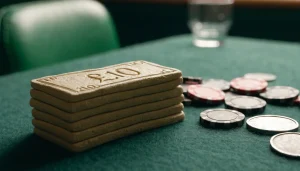
What the deposit actually establishes
A successful £1 payment establishes that funds have reached the gambling account. The balance is not promotional money merely because the site advertises a welcome package nearby. It is the player’s deposited cash, displayed separately or alongside any other balance according to the operator’s account design.
The deposit threshold also does not alter the basic identity checks that apply before gambling funds can be used. UK players must be at least 18, and operators must verify age before allowing deposits into a gambling account. A low cashier minimum is therefore not a shortcut around account controls. The small amount changes the size of the payment, not the regulatory process surrounding the account.
The same principle applies to financial controls. Remote operators must prompt new customers to set a financial limit before the first deposit and provide account-level tools for managing limits. A one-pound option sits inside that system. It is not a special account category with lighter expectations or fewer controls.
From an operational point of view, the threshold answers only the first question: can the account be funded with this amount? It does not answer whether the payment will be useful for the intended purpose.

Why the wording can be misleading
Casino advertising often compresses several conditions into one attractive phrase. “Low entry” may refer to the smallest amount visible in the cashier, while the adjacent promotion has its own qualifying deposit. “Start with £1” may describe a possible funding amount, while the games, bonuses and account conditions remain governed by their ordinary terms.
I have seen this cause confusion when a customer expected a promotional balance to appear immediately after making the smallest permitted payment. The cashier had worked exactly as described. The mistake was reading the deposit threshold as an all-purpose eligibility rule.
That interpretation is especially risky where the page presents the minimum prominently but leaves the offer conditions in smaller text. The meaningful comparison is not between the pound and the headline. It is between the pound and the specific qualification wording attached to the account or promotion.
A practical reading of “£1 minimum”
For a UK casino, the phrase can be reduced to four points:
- the operator permits a one-pound payment into the account;
- the payment is not automatically a bonus deposit;
- a separate welcome requirement may demand £5 to £10;
- age verification and financial-limit controls still apply.
This is the useful definition of a £1 minimum deposit casino. It identifies a low funding threshold, not a complete low-cost gambling experience and not a guaranteed promotional route.
The strongest description is therefore also the least dramatic: a £1 deposit can be a valid way to place money on the account, while the account’s other conditions remain unchanged. That may suit someone testing whether the cashier accepts a small payment. It may be less relevant to someone looking specifically for a welcome offer.
Small threshold. Separate rules.
How £1 Deposits Fit the UK Casino Market
A £1 cashier minimum sits at the very bottom of the British online casino market. It is not the normal entry point, and it should not be treated as a standard feature of every UK-facing site. The important distinction is between a casino that accepts a genuinely one-pound deposit and a page that merely uses “low deposit” as promotional language while setting a higher cashier minimum.
£1 Tier
The rarest advertised tier and requires specific verification.
£5 Tier
Offered by some operators, but is not the same as a one-pound minimum.
£10 Tier
The typical direct-banking threshold identified by a specialist review.
£20 Tier
Used by some operators, placing the cashier minimum well above the low-deposit category.
The market comparison is clearest when direct banking is considered. A specialist review places the typical minimum deposit at UK casinos accepting direct banking at £10, with some operators setting the threshold at £5 and others at £20. Against that range, £1 is an exception rather than a routine tier. A casino showing a £10 cashier minimum is not offering a one-pound account simply because some games have small stakes.
I have seen this confusion arise when promotional pages group £1, £5 and £10 options under the same “low minimum deposit” label. That label describes a category, not a cashier setting. The amount that matters is the minimum displayed in the deposit screen for the relevant UK account and payment route. If the cashier rejects a £1 entry and only accepts £5 or £10, the casino does not meet the strict meaning of a £1 minimum deposit.
How rare is a genuine £1 option?
The available verification is narrow. A specialist review identified six UKGC-licensed casinos accepting a genuine £1 minimum deposit. That figure describes the reviewed group at that point in time; it is not a permanent count of the British market. Operators alter cashier rules, payment availability and account settings, so a historical list cannot be treated as a standing directory.
A separate review identified NetBet as the only UKGC-listed casino on its list with a £1 cashier minimum deposit. The difference between these findings is a useful warning. The number depends on the list examined, the date of checking and what the reviewer counted as a qualifying UK account. One source may include several verified operators, while another may apply a narrower listing method.
That is why the words “best”, “legit” and “safe” need separating. A low cashier minimum says only that a small deposit is accepted. It does not, by itself, establish that the site is suitable, that the offer is available to every account, or that the same threshold applies permanently. Legitimacy in the British market depends on the operator holding the required UK Gambling Commission licence, not on the size of the advertised deposit.
Where the common tiers sit
The practical market ladder is more ordinary than the headline suggests:
- £1 is the rarest advertised tier and requires specific verification.
- £5 is offered by some operators, but it is not the same as a one-pound minimum.
- £10 is the typical direct-banking threshold identified by a specialist review.
- £20 is used by some operators, placing the cashier minimum well above the low-deposit category.

These tiers should not be confused with the minimum stake of a slot. A game may permit small bets while the casino requires a larger first deposit. “Online slots from a small stake” describes the game settings; it does not confirm that the account can be funded with £1.
The same separation applies to a casino bonus. A site may accept a £1 deposit yet advertise a promotion whose qualifying threshold is higher. A specialist review reported that welcome offers typically require deposits of £5 to £10, and some bonuses require a minimum qualifying deposit of £10 even where the platform accepts £5 deposits. Therefore, a £1 cashier minimum cannot be used as evidence that a £1 deposit activates a welcome deal.
What makes the comparison difficult
Cashier labels are not always presented consistently. One operator may display the minimum beside a payment icon; another may reveal it only after the account has passed its initial checks. A site can also show different limits for different routes, meaning that a low figure seen in one account or method does not automatically describe the whole operator.
This is why a trustworthy comparison needs three separate checks: whether the casino serves British customers under a current UK Gambling Commission licence, whether the UK cashier actually accepts £1, and whether the stated amount is a real deposit threshold rather than a bonus condition or game-stake reference.
My working rule is simple: count only what the cashier permits, not what the advert implies. Rare, not standard.
What Happens After the Deposit Reaches the Account
A £1 deposit is first recorded as cash in the casino account. It is not automatically converted into bonus funds, free spins or a larger playable balance. The cashier confirms the payment, the account balance updates, and the available games then determine how far that money can go.

That sequence matters because the deposit and the game wallet are connected, but they are not the same thing. A successful payment proves that the cashier accepted the transaction. It does not prove that every game, promotion or withdrawal route will treat the amount in the same way.
From cash balance to a playable stake
Once the money is available, the player selects a real-money game and chooses a stake. Many slots accept bets between £0.10 and £0.20 per spin. At that scale, a £1 balance represents only a small number of spins before the balance reaches zero, unless a win returns money to the account.
The arithmetic is straightforward, but the outcome is not. A £0.10 spin does not preserve the balance; it exposes that part of the balance to the result of the game. A £0.20 spin exposes more of it at once. The lower stake stretches the starting amount across more spins, while the higher stake makes the balance move more quickly.
I have seen players treat the displayed balance as if it were a session budget with a predictable duration. It is not. Every spin is a separate wager, and the account can move from £1 to nothing without any requirement that the casino extend play or replace the lost funds.
The reverse is also possible. A winning spin adds cash winnings to the account, so the balance may become larger than the original deposit. Those winnings remain subject to the casino’s account and withdrawal rules, even when no promotion is involved.
The sequence of a deposit
A successful £1 payment establishes that funds have reached the gambling account. It is the player’s deposited cash, and the available games then determine how far that money can go.
Once the money is available, the player selects a real-money game and chooses a stake. Many slots accept bets between £0.10 and £0.20 per spin. A £0.10 spin exposes a part of the balance, while a £0.20 spin exposes more at once.
What the balance does not explain
The cashier balance normally shows how much money is present, but it may not show the whole withdrawal position. A casino can distinguish between cash funds, bonus funds and winnings connected to promotional conditions. A £1 cash deposit therefore should not be confused with a guaranteed withdrawable amount of the same value.
This is why the account history and transaction area matter. They show whether the payment was completed, whether a game has settled, and whether any funds are still tied to an offer. A balance can look positive while a separate condition still controls when money may leave the account.
The practical path is therefore:
- The £1 payment is accepted and credited.
- A real-money game uses part or all of the cash balance.
- Wins are added after the relevant game round settles.
- The resulting balance remains in the account until a withdrawal is requested.
- The cashier applies its withdrawal conditions before releasing funds.
That process is mechanical rather than promotional. The account does not become more useful merely because its opening deposit was small.
Why a win may still not be withdrawable
A low entry amount can create a mismatch between the balance and the cashier’s withdrawal rule. A specialist review of UK casino terms reported minimum withdrawal thresholds at many operators between £10 and £20. That range is not a fixed rule for every casino, but it illustrates the issue: a player can turn a £1 starting balance into a positive balance and still be unable to request a payout if the account has not reached the applicable threshold.

For instance, a balance below the casino’s stated minimum may remain in the account even though it contains winnings. The money has not necessarily disappeared; the withdrawal request simply does not meet the cashier condition. Further play may change the balance, but it also exposes the existing funds to additional risk.
This is the point often hidden by the phrase “£1 minimum deposit”. The phrase describes the amount needed to enter money into the account. It says nothing by itself about the amount required to withdraw, the games available at that stake, or whether a positive balance can be transferred out immediately.
A small deposit and account checks
A withdrawal can also trigger the operator’s normal account review. The casino may need to confirm identity, age and payment ownership before processing the payment. These checks are part of the account’s operating procedure, not a special penalty for depositing £1.
The customer must be at least 18, and the operator must verify age before allowing gambling deposits. A low cashier minimum does not remove those controls. Nor does it remove the requirement to use an approved funding route. The account remains subject to the same operating framework after a small payment as after a larger one.
From the operator’s side, the important figures are not only the opening deposit. The system records the payment, the wagers, the settled results, the resulting balance and the requested withdrawal. Each stage can have its own status. “Payment received” and “withdrawal available” are separate messages.
What the £1 path really shows
A one-pound deposit can open a real-money account balance, but the scale of play is narrow. At the lower slot stakes, it may support several short attempts; at the higher stake, the balance is consumed more quickly. A win can create a larger balance, yet a withdrawal threshold may still stand between that balance and a payout.
The useful test is therefore not whether the cashier accepts £1 alone. It is whether the complete route—from crediting the cash, through settling a game, to meeting the withdrawal condition—makes sense for the intended session. Small entry point. Separate exit rule.
Payment Routes That Can Handle a £1 Deposit
A £1 cashier minimum does not belong to a payment method in isolation. It belongs to the combination of the casino, the UK account, the chosen route and the cashier settings active at that moment. One operator may show the same minimum for every available method; another may apply a higher threshold to direct banking while leaving cards or e-wallets available for a smaller payment.
That distinction matters because the phrase “£1 deposit” describes the amount accepted by the cashier, not necessarily every route displayed in the cashier. A site can technically support a £1 minimum deposit while restricting that amount to selected methods. The payment page is therefore more useful than a general advertising label.
Debit cards: the most direct route
Visa and Mastercard debit cards are accepted by almost all UK online casinos and can support low minimum deposits. They are funded from a bank account rather than a credit facility, which is important under the UK gambling payment rules. The UKGC’s ban on credit-card gambling means a credit card cannot be used for a casino deposit, including through arrangements designed to disguise the original funding source.
For a small deposit, the card route is straightforward when the cashier actually lists £1 as the minimum. The card being accepted by the operator does not itself prove that the smallest amount is available. The cashier may show a different threshold for the same card brand, or a selected card route may disappear until account checks have been completed.

I have seen “cards accepted” treated as shorthand for “£1 accepted”. That is too loose. The first statement concerns the payment instrument; the second concerns the operator’s cashier configuration.
E-wallets and the funding source
E-wallets can also be used for a small deposit, provided the wallet balance comes from an allowed source. A wallet funded by a debit card or bank account fits the permitted structure. A wallet that allows credit-card funds to be used for gambling does not make that funding route acceptable merely because the casino sees an e-wallet transaction.
The cashier minimum can be different for an e-wallet than for a debit card, although it may also be identical. Some operators apply one minimum across the available methods, while others set a higher threshold for a particular route. That is why a casino described as an online casino with a £1 minimum deposit may still show a larger minimum when a specific wallet is selected.
The practical check is simple: select the payment method, read the minimum shown beside the amount field, and confirm that the available funding source is compliant. The word “wallet” is not a regulatory shortcut.
Direct banking
Direct banking is another compliant route where the money comes from a bank account. It can be available at the same operator as card and e-wallet deposits, but the cashier does not have to treat every method identically. Some casinos set a higher minimum for direct banking than for cards or e-wallets.
This difference is especially relevant when the target deposit is only £1. A direct banking option may be present, yet unavailable for that amount. In that case, the account has not failed to support low deposits in general; the selected route simply has its own cashier minimum.
A specialist review may describe the typical minimum deposit for direct banking at UK casinos as £10, with some operators showing £5 or £20 instead. That description is a market snapshot, not a permanent rule for every operator. The live cashier remains the controlling detail.
Mobile billing and narrow availability
The absolute lowest deposit tier is £1, but it is rare and can be limited to specific payment methods such as Boku or Payforit mobile billing. These routes should not be assumed to appear at every UK casino, nor should the existence of a mobile-billing option be read as evidence that cards, wallets and direct banking will accept the same amount.
The important distinction is between the casino’s overall minimum and the method-specific minimum. A page may advertise a £1 minimum deposit while the cashier presents that amount only after a particular route is chosen. Payment availability can also depend on the UK account rather than on what is displayed in material intended for another market.
Transaction fees change the effective amount
A £1 payment can be reduced in value by a transaction charge. A specialist review reports flat payment-provider fees ranging from £1 to £3 for some transactions. That is not a universal charge for every route, but it shows why the amount entered in the casino cashier and the amount lost from the funding source should not be treated as the same thing.

A flat £1 fee attached to a £1 deposit would match the deposit itself. A larger flat fee would exceed it. The casino account may still receive the selected deposit amount, while the payment provider charges separately under its own terms. Whether the fee is charged to the sender, deducted from the transfer or not applied at all depends on the provider and transaction setup.
This is where the “small test” language can hide the cost. The cashier may accept the amount, but the payment route can make that test disproportionately expensive.
A practical method comparison
| Route | Can support a £1 deposit? | Main point to check |
|---|---|---|
| Visa or Mastercard debit card | Yes, where the cashier sets that minimum | Confirm that the displayed threshold applies to the selected card route |
| E-wallet funded by debit or bank account | Yes, where enabled at that threshold | Check both the casino minimum and the wallet’s funding source |
| Direct banking | Sometimes, but the operator may set a higher minimum | Read the method-specific cashier limit |
| Mobile billing such as Boku or Payforit | May support the lowest tier at selected casinos | Confirm availability for the UK account and any transaction charge |
None of these routes should be funded by a credit card. Age verification and the casino’s account controls remain part of the deposit process, and the operator must prompt a new customer to set a financial limit before the first deposit. The payment choice is only one layer of the transaction.
The cleanest comparison is therefore not “which method is cheapest” in the abstract. It is: which compliant route is available, what cashier minimum does it show, and what fee applies before the £1 reaches the account?
Real-Money Play on a Small Starting Balance
A £1 minimum deposit casino can provide genuine cash play without requiring a larger opening transfer. Once the money is credited as cash rather than promotional funds, it can be used for eligible games under the operator’s ordinary rules. That distinction matters: the balance is not automatically a bonus, and the small deposit does not create extra playing funds.
DO
- Treat a £1 balance as a narrow cash session
- Check the qualifying amount for welcome offers
- Verify the specific withdrawal thresholds
DON’T
- Assume a £1 deposit activates a welcome bonus
- Treat a low deposit as a guarantee of low costs
- Confuse game stakes with cashier minimums
The practical question is how far one pound can go. Many online slots accept stakes between £0.10 and £0.20 per spin. At the lower stake, the balance represents a limited number of spins if every result loses; at the higher stake, it is consumed more quickly. Wins may extend the session, but they cannot be treated as a planned source of additional funds. Casino results remain uncertain.
I have seen small-balance play misunderstood as a cheap way to test every part of a casino. It is better understood as a narrow cash session. A £1 balance may allow a few low-stake spins and a look at how the game operates, but it does not provide meaningful room for extended play, higher-stake games or repeated losses.
The same point applies to mobile casino play. A phone or tablet changes the access route, not the mathematics of the balance. A £1 deposit remains £1 whether the cashier is opened through a desktop browser or a mobile interface. Touch controls may make the session easier to start, but they do not make the starting amount last longer.
Cash play also needs to be separated from promotional play. A deposit can be available for real-money betting while failing to qualify for a welcome offer. If bonus funds are added, their restrictions belong to that separate balance and should not be confused with the value of the original cash deposit. For a straightforward test, the relevant figures are the cash balance, the selected stake and the result of each spin.

Withdrawal rules can make a winning balance less convenient than the deposit itself. A specialist review reports minimum withdrawal settings ranging from £1 to £5, but those limits are operator-specific and can change. A balance below the applicable threshold may remain in the account even if it came from a genuine cash deposit. That is why a one-pound starting amount should not be described as proof of a one-pound cash-out facility.
Debit cards and some e-wallets can support a £1 transaction, but the ability to fund the account does not determine how much can later be withdrawn. The cashier applies separate rules to deposits and withdrawals. Small stake, small balance, small margin.
GamStop Status and the £1 Minimum
A £1 cashier minimum and GamStop status are separate questions. A casino may advertise a very small opening deposit, but that does not make it part of the GamStop scheme, nor does a site described as “not on GamStop” become a safer alternative because the starting amount is small.
GamStop is a self-exclusion service. Where a person has registered, looking for an operator outside the scheme is not a harmless payment search; it can represent an attempt to bypass a protection that was put in place deliberately. I would never treat “not on GamStop” as a product benefit. It says something about the operator’s relationship with the scheme, not about game fairness, customer support, financial safeguards or the suitability of gambling.
There is also a legal distinction. A remote operator selling gambling to Great Britain must hold a current UK Gambling Commission licence, regardless of where the company is based. Online gambling is legal in the UK only through licensed and regulated sites. An offshore casino operates outside the UKGC system and does not hold that licence. A player is not criminally liable merely for playing there, but the absence of UK oversight changes where complaints, dispute handling and account protections sit.
That matters when a page combines “£1 minimum deposit” with “not on GamStop”. The first phrase concerns the cashier threshold. The second describes a safer-gambling position, or the lack of one. Neither proves that the other exists, and neither is a substitute for checking whether the operator is authorised to serve Great Britain.
Age controls remain relevant even where the deposit is only £1. UK players must be at least 18, and an operator must verify age before allowing a gambling deposit. A small transaction does not make those obligations disappear.
The clean distinction is simple: a genuine £1 minimum may be available at some licensed casinos, while “not on GamStop” is not a recommendation, a quality mark or a route around self-exclusion. Small amount, serious boundary.
PayPal, Small Deposits and the Cashier Minimum
PayPal can appear in the cashier alongside other e-wallets, but its presence does not establish a universal £1 payment threshold. The decisive figure is set by the casino’s cashier for that account and payment route. A casino may accept PayPal while applying a higher minimum to the transaction, or it may display a £1 option for one funding method but not another.
That distinction matters because “PayPal available” and “£1 minimum deposit” describe different things. The first identifies a payment option. The second describes the smallest amount the operator is prepared to accept through a particular cashier route. They overlap only when the cashier shows both PayPal and £1 as available for the account.

The position can also differ between e-wallets and direct banking. At a given UK operator, the minimum deposit is generally aligned across payment methods, although some casinos set a higher threshold for direct banking than for cards or e-wallets. The payment button therefore needs to be checked after logging in, rather than inferred from a general payment-method list.
There is a firm compliance boundary behind that cashier design. UK gambling deposits cannot be made with credit cards. The permitted funding routes are debit cards, e-wallets funded from debit sources, and bank accounts. PayPal is therefore relevant only when the wallet balance or linked funding source complies with those rules; the name of the wallet does not turn a prohibited credit-funded payment into an acceptable gambling deposit.
In practice, a genuine small-deposit casino in the UK should show the amount and method together in the cashier, before confirmation. A page saying that PayPal is supported is not enough. The payment route may be present, yet the operator’s own cashier minimum may still be higher.
The label is not the setting.
Low Minimums Are Not the Same as Low Costs
A low cashier minimum answers one narrow question: how little money can be placed into the account in a single transaction? It says nothing about whether that payment is economical, whether the balance qualifies for an offer, or whether the casino’s conditions make the funds useful.
Transaction charges matter more when the deposit is small. A specialist review reported that some payment providers apply flat fees of £1 to £3. Against a £1 deposit, that is not a minor detail; it can match or exceed the amount being added. The charge may come from the provider rather than the casino, so the cashier page and the payment service terms both deserve attention.
Promotions create another distinction. A casino may advertise a low minimum deposit while excluding the lowest deposit bracket from its welcome offer. That means the deposit can still be credited as cash, but the promotional balance or spins will not be attached. A specialist review has described this exclusion, but it is an operator-specific condition rather than a general rule for every UK casino.
The wording around “low deposit” often hides this separation. The number displayed beside the deposit button is an entry condition, not a measure of value. Fees, excluded promotions and the practical terms attached to credited funds can all change the result.
From my own checks, the useful comparison is not simply the smallest permitted payment. It is the amount that reaches the account after charges and what that amount is allowed to do. Small headline. Different economics.
Why a £1 Deposit Can Still Be a Small Test
A £1 minimum deposit is best understood as an entry test, not as proof that the account comes with meaningful extra value. The money reaches the casino balance, but the amount itself does not guarantee a welcome offer, free spins or any other promotional credit.
A specialist review of UK casino conditions notes that welcome offers commonly set a qualifying deposit between £5 and £10. On that basis, a £1 payment may fund ordinary cash play while leaving the promotion inactive. The cashier accepting the amount and the promotion accepting it are separate decisions.
That distinction matters because “minimum deposit” describes only the smallest permitted funding transaction. It says nothing about the balance needed to trigger an offer, the games available for the money, or the conditions attached to later withdrawals. Marketing compresses those points into one attractive figure. The terms separate them again.
A further limitation is the withdrawal threshold. A specialist review reports that many UK casinos set a minimum withdrawal above £1. A small deposit can therefore serve as a test of registration, payment processing and basic account operation without making the account ready for an immediate cash-out. Any winnings would still be subject to the operator’s stated withdrawal rules.

I treat the pound as a probe: enough to check whether the advertised cashier minimum is real, but not enough to assume that every advertised feature follows it. Some operators also restrict payment methods at this level, so the result can depend on the cashier route selected.
Small entry. Separate conditions.
The Terms to Check Before Depositing £1
A £1 cashier minimum says very little about what happens after the payment is accepted. The important wording sits in the promotion and withdrawal terms, not beside the deposit button. I have seen “eligible deposit” used as if every accepted payment qualified; it does not.
The first check is the qualifying amount for a welcome offer. A casino may accept £1 while setting a higher minimum deposit for the promotion. In that case, the money becomes cash balance, but no bonus or free spins are added. Some operators also exclude the lowest deposit bracket altogether. The cashier and the promotion are separate systems.
If a bonus is credited, its wagering rule applies to the bonus value, not to the payment method used to fund the account. Specialist review material places commonly advertised bonus wagering requirements between 30x and 65x the bonus amount, but the individual offer terms control. The same principle applies to game restrictions: slots, table games, and other products may contribute differently. “Included” is not the same as “counts fully”.
The withdrawal clause needs equal attention. A casino may attach a maximum withdrawal cap to bonus funds, and that cap belongs to the bonus terms rather than to the £1 deposit route. Other conditions can include completing wagering, identity checks, or allowing only eligible winnings to be withdrawn.
The practical reading order is simple:
- qualifying deposit;
- wagering multiplier;
- permitted games;
- withdrawal cap;
- expiry and forfeiture wording.
A low entry point is only the first line. The rest decides the value.
Why do online casinos accept a minimum deposit of £1?
A £1 minimum gives players a way to fund an account with a small amount. It does not automatically qualify the deposit for a bonus or change the casino’s usual account rules.
What is the minimum deposit at UK casinos accepting direct banking?
The typical minimum is £10, although some operators set it at £5 or £20. Check the cashier, as bank transfers can have a higher minimum than cards or e-wallets.
Are there no-minimum-deposit casinos?
No. A casino account must be funded with a deposit to play with real money; the lowest stated deposit tier is £1.
Which UK casinos accept a £1 deposit?
NetBet is the only UKGC-listed casino identified as accepting a genuine £1 minimum deposit.
Do direct banking deposits qualify for welcome bonuses at UK-licensed casinos?
Yes. Direct banking deposits can qualify on the same basis as card or e-wallet deposits, but the qualifying amount and other bonus conditions still apply.
What is the current minimum deposit?
The lowest stated minimum at UK casinos is £1, although it is rare and may be limited to particular payment methods. Direct banking typically requires £10, with some operators setting £5 or £20.
Is a £1 deposit casino worth it?
It can suit someone who wants to test a small payment, but a £1 deposit usually will not meet the £5–£10 minimum required for a welcome offer. Also check withdrawal minimums, which are often £10–£20.
Payments & Payouts: UK Casino Deposit Options
Created by the "Casinoexitgamstop.com" editorial team.