

By Daniel Ashworth, Gambling Regulation Analyst. Published 10 October 2026. About 12 minutes to read.
A casino not on GamStop is simply an online casino that never receives the GamStop block list, because it does not hold a UK Gambling Commission licence. That single technical gap is the whole foundation of the category. This page maps how these sites actually work, who runs them, and why the convenience they advertise sits on top of documented consumer-protection failures.
The full picture is in our roadmap to casinos not on GamStop.
Start with the block list that never arrives
To understand the category you have to understand the mechanism it routes around. GamStop is the UK national online self-exclusion scheme, run by The National Online Self-Exclusion Scheme Limited (NOSES), a not-for-profit body, and described in full on the official GamStop site. When a person registers, GamStop matches them on personal data such as name, date of birth, address and email, then distributes those details to operators that subscribe to the scheme. Those operators are required to close or block matching accounts and to refresh their copy of the list every 24 hours. The critical detail is who subscribes: only operators that hold a UK Gambling Commission remote licence are bound to the scheme, because participation became a condition of holding that licence from 31 March 2020 and was later extended to telephone and email betting from 1 April 2024.
An operator licensed only in Curacao, Anjouan or Costa Rica is not a Gambling Commission licensee, so it never receives the GamStop file in the first place. There is no central register checking it, no list arriving every 24 hours, and no obligation to act on a self-exclusion. For a person who has self-excluded, the practical result is blunt: sign-up and deposit on these sites proceed exactly as they would on any other website, with nothing in the way. If you want the precise mechanics of the scheme that is being bypassed, our explainer on how GamStop self-exclusion works walks through registration, exclusion lengths and the 24-hour refresh in full. For the bigger picture, you can also return to the casino not on GamStop roadmap.
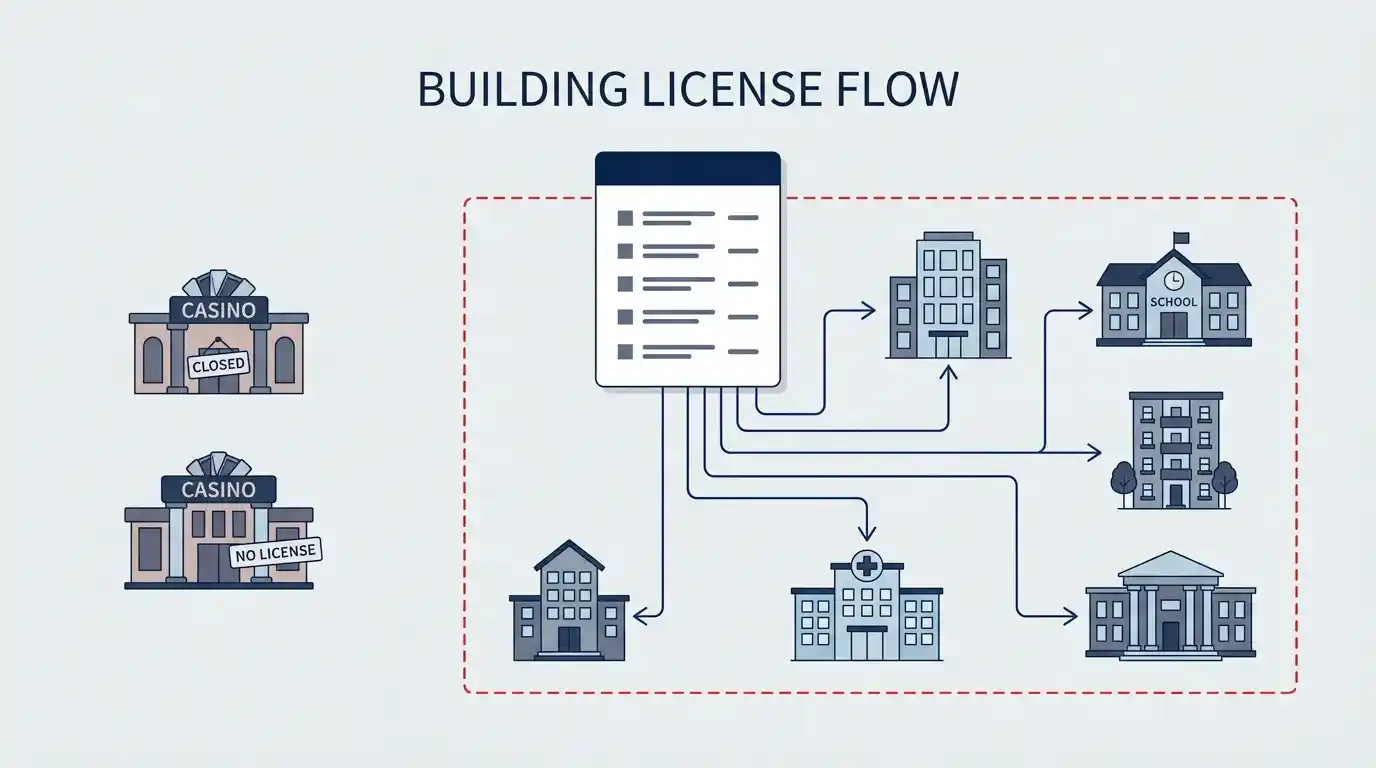
It is worth being precise about what this does and does not mean. The absence of the GamStop block is not evidence that an operator is safe, licensed appropriately for the UK, or acting lawfully toward British customers. It only means the operator sits outside the British licensing system that GamStop is attached to. Treating “not blocked” as “approved” is the first and most common misreading of the whole category.
Trace the operator-network model behind the brands
Affiliate listings present these sites as a long menu of independent casinos, each with its own personality and welcome offer. The documented reality is more concentrated. A single corporate group can sit behind many consumer-facing brands, sharing back-end systems, payment rails and marketing infrastructure while presenting a different name and look on each domain. The clearest investigated example is the network associated with Santeda International B.V., a Curacao-registered company that has been linked in reporting to a family of brands marketed to UK players. Independent monitors have grouped names such as Velobet, Rolletto, Goldenbet, Cosmobet and Donbet within the same orbit, alongside the better-known MyStake brand.
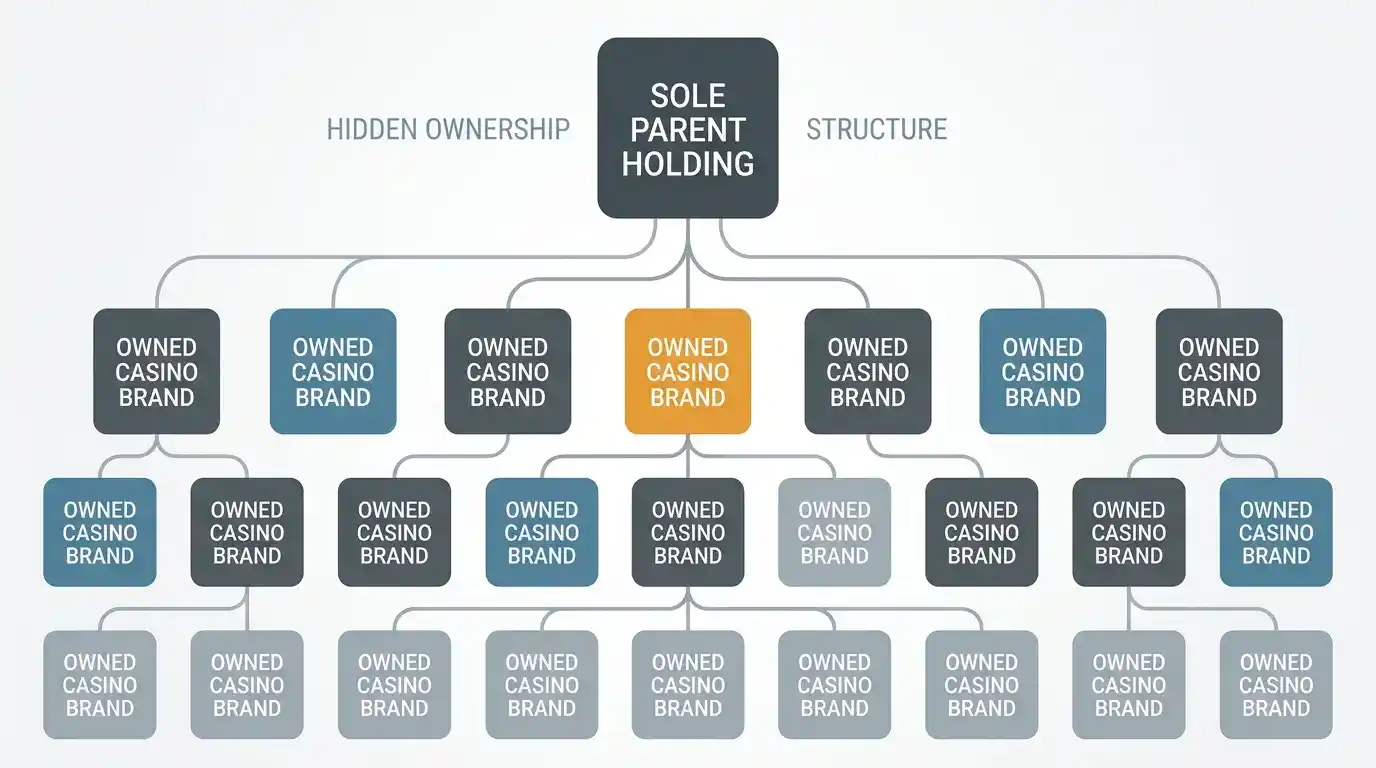
The significance of the network model is not gossip about who owns what. It changes the protection picture. When several brands share a single operator, a problem with one brand (a withheld payout, a refusal to honour a self-exclusion request, an account freeze) is rarely a quirk of that one site. It tends to reflect group-level policy. It also means that closing or even successfully complaining about one brand does little, because the same machinery can re-present itself to the same customer under a different name. A December 2025 report from the gambling research group GAMRS and a February 2026 investigation by The Guardian estimated, on reported figures, that roughly GBP 1.2bn was wagered with MyStake by UK-facing customers during 2025, and around GBP 3.51bn across the wider network, with a large majority of revenue traced to UK consumers. Those are reported estimates rather than audited accounts, but they indicate scale, not a fringe.
Watch for the domain-and-licence swapping pattern
One feature of the network model deserves its own heading because it directly undermines any attempt at recourse. Investigators have described a “Hydra”-style pattern in which an operator under regulatory or reputational pressure simply swaps domains and shifts licences, allowing the underlying business to continue while the visible brand changes. In practice that can mean a casino footer that once named one corporate entity later naming another, a licence reference that appears and then lapses, and a domain that goes quiet while a near-identical site appears elsewhere. Reporting in early 2026 indicated that some of the corporate shells previously associated with the Santeda network had been wound up ahead of further scrutiny, which is exactly the behaviour the Hydra description captures.
For a player this pattern has a hard edge. If your balance sits with an operator that dissolves its corporate shell and reappears under a new name and licence, there is no UK body that can compel the new entity to honour the old balance. This is one of the central themes that runs through what protection you give up offshore, and it is why the question of who actually holds the licence, covered on the offshore licences behind these sites, matters far more than the welcome bonus on the front page.
See where identity checks really happen
On a Gambling Commission licensed site, identity verification (Know Your Customer, or KYC) is a licensing requirement and is generally completed up front, before meaningful play. The offshore pattern is different and is often advertised as a feature: checks are lighter, or deferred to the withdrawal stage, and some sites promote “no verification” play as a selling point. The marketing frames this as privacy and speed. The protection reality is that deferring KYC moves the verification burden to the exact moment a player tries to take money out.
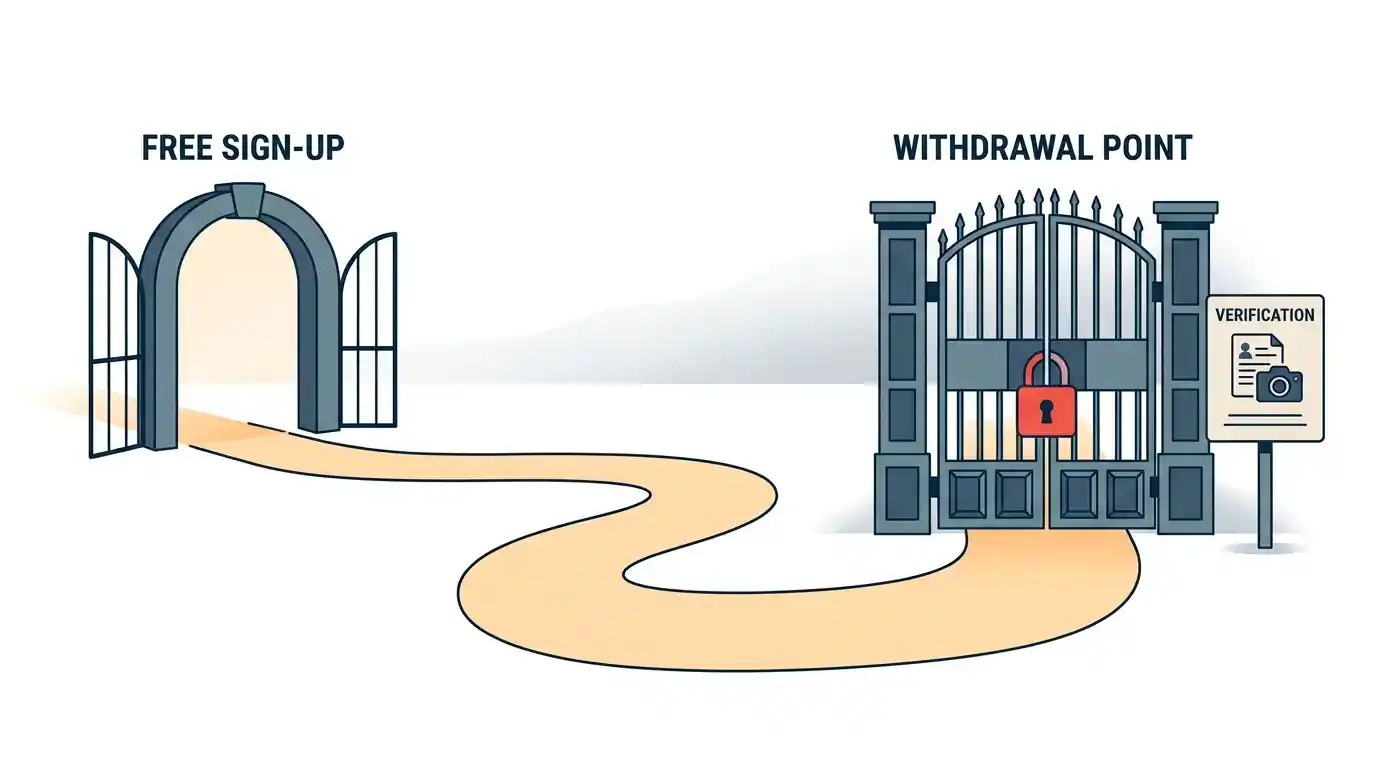
That timing is the problem. The documented complaint pattern across rogue sites is that verification suddenly appears at withdrawal, with repeated and sometimes impossible document demands used to stall or block a payout after a win, frequently alongside an allegation of “bonus abuse” or “fraud” that freezes the account. Deferred or absent KYC is also an anti-money-laundering red flag in its own right, not a neutral convenience. We treat this in depth on the dedicated page about no verification sites and the risks, because the “no KYC” long-tail is one of the most actively searched and most misleadingly sold parts of the category.
Follow the money and the marketing
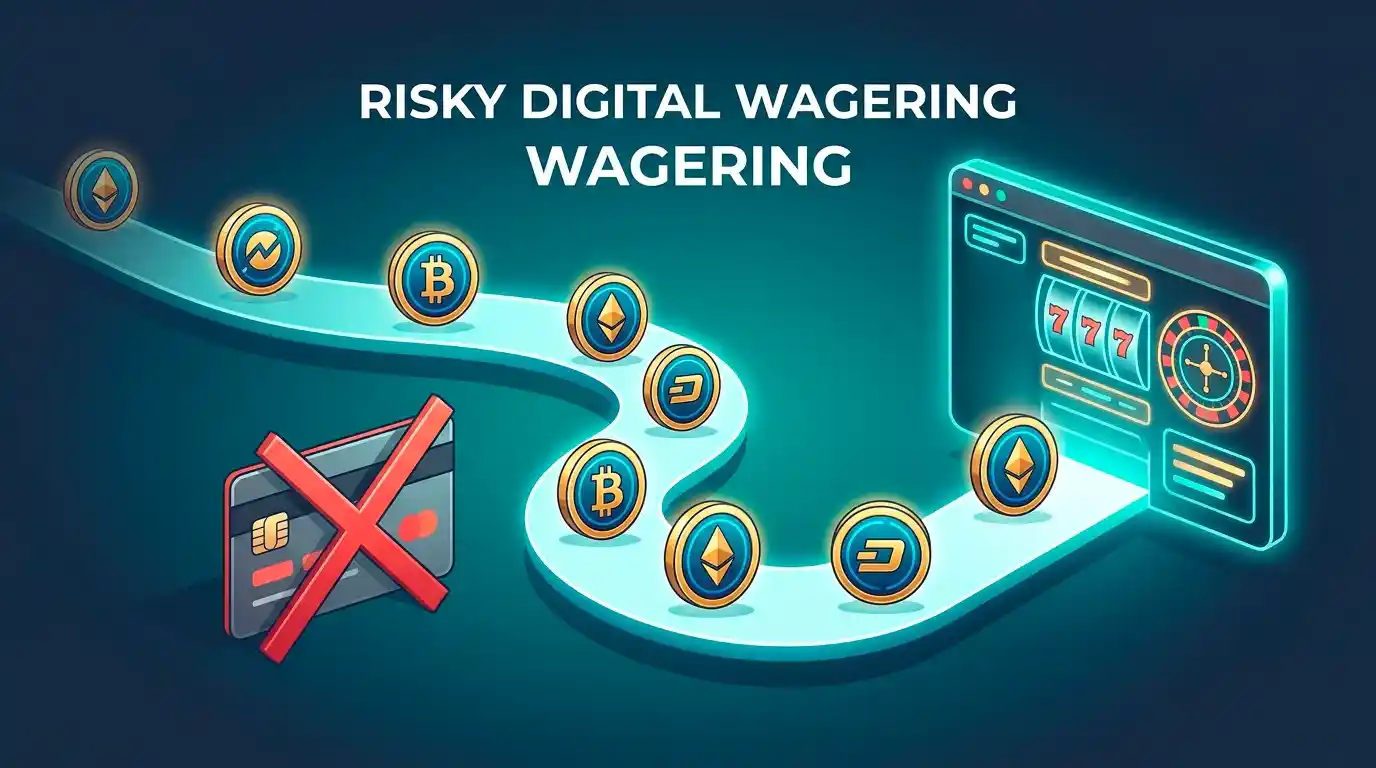
Two further mechanics complete the picture: how these sites get paid, and how they find their customers. On payments, offshore casinos lean heavily on cryptocurrency. Bitcoin, Ethereum and stablecoins such as USDT are the headline options precisely because they do not require bank details and are harder to block. That reliance is not an accident of fashion. From the 2014 point-of-consumption regime onward, and reinforced by the 2026 Illegal Gambling Taskforce, UK payment providers have increasingly blocked transactions to unlicensed gambling sites, with Visa and Mastercard named among the taskforce participants committing to disrupt those payments. Crypto rails are the workaround to that block, which is why the sites depend on them. The detail of how this plays out, and why crypto is a risk marker rather than a feature, is set out in our guide to how payments work offshore.
On marketing, the uncomfortable fact is that affiliates promote these sites using the exact phrase “not on GamStop”, which is a phrase a person is most likely to type when they have self-excluded and are looking for a way back. The targeting is, by design, aimed at the very people the scheme was built to protect. The GAMRS and Guardian reporting documented one personal account of a person whose gambling worsened after a family bereavement and who, despite being registered with GamStop, continued to receive promotional offers from offshore brands. That is the human centre of why this site reframes the category around protection rather than promotion, a stance you can read more about across the wider overview for UK players.
Read the bonus and game claims with care
The other recurring sales pitch is generosity: bigger, less restricted bonuses and large libraries of familiar slots and live-dealer tables. Both claims need qualification. From 19 January 2026, Gambling Commission operators face a 10x cap on bonus wagering requirements and a ban on mixed-product promotions, so offshore bonuses can indeed look larger because they sit outside those rules. The flip side is that the same freedom allows very high wagering requirements, low maximum bets while wagering, near-total win caps and unilateral voids, which means a bonus that looks generous on the banner can be effectively unpayable in the terms. On games, a familiar studio logo is not proof the copy is genuine: the Gambling Commission issued an industry warning on 20 January 2025 that games supplied by licensed studios were appearing on unlicensed sites accessible to GB consumers illegally, and blacklists document pirated or return-to-player-manipulated copies of well-known slots on rogue sites. We unpack both halves of this trade on the page about bonuses and game fairness.
Know where the law actually falls
It is easy to read all of the above as a description of a shady-but-legal corner of the internet. The legal position is more specific. Under the Gambling Act 2005, providing facilities for gambling to the British market without a Gambling Commission licence is an offence that falls on the operator, and the point-of-consumption test introduced by the Gambling (Licensing and Advertising) Act 2014 extends that offence to remote operators who know, or should know, that their facilities are likely to be used in Great Britain.
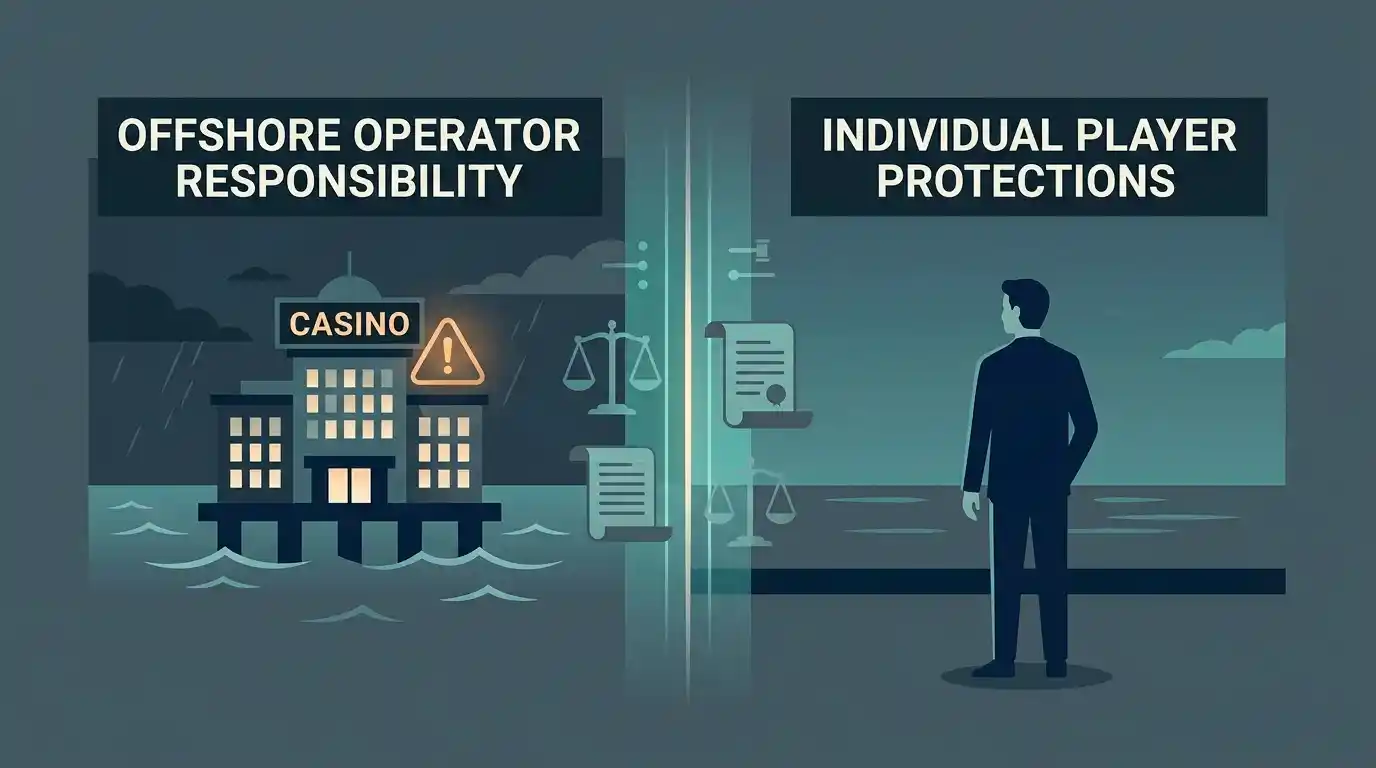
In other words, an offshore casino knowingly serving GB players without a UKGC licence is operating illegally from the UK’s point of view, even though the individual player is generally not committing a criminal offence by accessing it. That distinction is the whole subject of the legal status of these operators, and it is the reason “not blocked” should never be read as “approved”.
Putting the mechanics together gives a single, honest summary of how casinos not on GamStop operate. They exist because the GamStop list only reaches Gambling Commission licensees. They are often run by concentrated networks rather than independent brands. They lean on deferred verification and crypto because the regulated payment and identity systems are designed to exclude them. And they are marketed, deliberately, to people who have asked to be kept out. Each of the supporting pages in this section takes one strand of that and follows it to the consumer-protection consequence, with primary sources at every step.
If the way back is what you are looking for
If you are reading this because you self-excluded and now want to gamble again, the reason you signed up to GamStop is still valid. Talking it through first is the protective step. The National Gambling Helpline, operated by GamCare, is free and open 24 hours a day on 0808 8020 133 for residents of England, Scotland and Wales, with live chat and WhatsApp available through GamCare. You can also reach support and tools through BeGambleAware, and the official self-exclusion scheme is explained at GamStop. Our own page on where to get help sets out the free blocking tools that close the offshore route GamStop alone leaves open.
About the author
Daniel Ashworth is a gambling-regulation researcher who has spent more than a decade analysing how UK and offshore licensing frameworks shape online casino access. His work focuses on self-exclusion mechanisms, consumer-protection rules and the practical risks players face when they look beyond GamStop-registered operators. He writes plain-English explainers that translate licence conditions, regulatory consultations and case law into guidance ordinary readers can act on. He holds a recognised responsible-gambling practitioner certification and regularly references primary regulatory sources rather than secondary commentary. Read more on the about page.
This page is informational and does not endorse any operator. Named brands appear only as documented examples of the category, each paired with an objective risk marker. Verify any dated fact against the linked primary sources before relying on it.
Which regulator stands behind them: the offshore licences.
Offshores
Prepared by the Casinoexitgamstop.com editorial staff.