
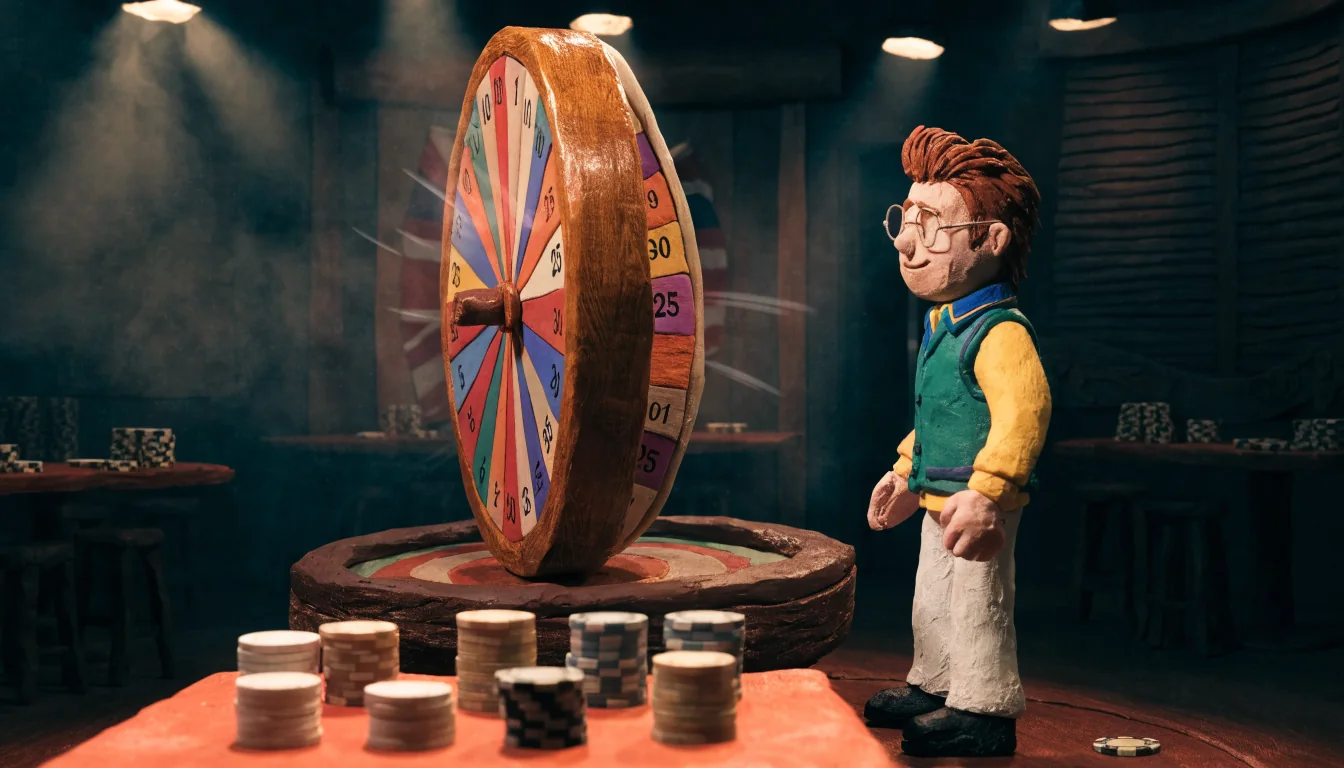
Dream Catcher combines a streamed studio presentation with casino wagering, while the operator and game provider handle different parts of the experience.
What Dream Catcher Is—and What “Live” Changes
Dream Catcher is a live casino game built around a studio presentation rather than a conventional reel-based casino format. A presenter hosts the game from a streamed set, introduces each round and keeps the action moving while the game interface displays the available wagering choices. The result sits between a broadcast and an online casino product: the event is presented live, but participation takes place through the operator’s website or app.
That distinction matters. “Live” describes the way the game is delivered, not a separate kind of casino licence and not a promise that every part of the experience is unique to one website. Dream Catcher is a product supplied by a game provider and made available through casino operators that have chosen to include it in their live-game offering. The casino supplies the account, cashier, customer support and access controls; the provider supplies the game presentation and technical stream.
I have seen players treat those two layers as if they were interchangeable. They are not. A polished studio broadcast does not, by itself, establish anything about the company taking deposits. Conversely, a familiar casino brand does not change the identity of the game being streamed. Keeping the roles separate is the first useful check.
The game and the casino are different things
The Dream Catcher game is the content on screen: the studio, presenter, wheel, graphics, round structure and betting interface. The online casino is the commercial environment around it. That environment determines how an account is opened, how identity and age are checked, which payment methods are available, how limits are applied and how complaints are handled.
This is why the phrase “Dream Catcher casino” can be misleading. It may refer to a casino website that hosts the game, or it may be used informally to describe the game itself. There is no need to assume that a site using the phrase created the game or controls its studio. In practical terms, the casino is the access point, while Dream Catcher is the live product inside that access point.

The same separation applies when a casino promotes a “live Dream Catcher” experience. The live element normally concerns the streamed presentation and interaction with the hosted round. It does not turn the operator into the game provider, and it does not remove the operator’s responsibility for the gambling account. Marketing compresses those roles into one label. Account terms do not.
What “live” changes for the experience
A live format gives the game a visible host and a scheduled studio environment. Instead of an entirely software-generated screen, the presentation includes a person conducting the round and a broadcast feed that connects the casino interface with the studio. This can make the session feel more like joining a casino floor than launching a standard digital game.
It also changes the rhythm. The round is presented as an event with an opening, a period in which wagers can be placed, and a closing moment after which the result is shown. The interface is designed to communicate that sequence clearly. A connection problem, delayed stream or closed wagering window therefore affects the experience differently from a simple static game screen.

That does not mean “live” should be read as “better”, “fairer” or more favourable. It describes delivery. The presence of a presenter may make the game more engaging, but it does not alter the underlying commercial relationship with the casino. Nor does a live broadcast remove the need to understand the operator’s terms, account controls or complaint route.
The distinction is especially important in the United Kingdom. Remote gambling offered to consumers in Great Britain is regulated through the UK Gambling Commission, and an operator serving that market must hold the relevant operating licence even if the equipment supporting the service is located elsewhere. The Commission is the regulator for commercial gambling in Great Britain and issues operating permissions to businesses, alongside personal licences for individuals working in regulated gambling roles. The Gambling Act 2005 provides the main legal framework for gambling in England, Wales and Scotland; Northern Ireland is outside that Act’s scope.
Those rules apply to the operator’s service, not merely to the visual quality of the Dream Catcher stream. A live studio can look established and professional while the important questions sit elsewhere: who provides the account, which business accepts the wager, and under what regulatory permission? The broadcast is the visible part. The licence is the less visible part.
A live casino is still an online casino
The word “live” sometimes creates the impression that online safeguards are less relevant because a human presenter is involved. In fact, the player remains on a remote gambling account. The casino still controls access to the game, records account activity and applies its own transaction and responsible-gambling procedures within the applicable regulatory framework.
That is also why Dream Catcher should not be confused with a physical casino table simply because it is hosted in a studio. The setting may resemble a casino floor, but the participation is remote. There is no need to travel to the studio, and the casino account remains the route through which the game is entered.
Mixing them produces lazy descriptions such as “a casino called Dream Catcher” or “a website that runs the wheel”. Both hide the commercial structure.
The useful starting point is therefore straightforward: Dream Catcher is a live casino product, the studio stream is part of its presentation, and the website is the operator’s delivery channel. Once those roles are clear, the claims made around a live Dream Catcher casino become easier to read without treating advertising language as evidence.

Finding Dream Catcher in an Online Casino
Dream Catcher is normally found through an online casino’s live-games area rather than its slot catalogue. That distinction matters because casino menus are organised by product type, provider, and presentation. A title can be available to UK customers while remaining difficult to locate if it is filed under a broad heading such as “Live Casino”, “Game Shows”, or “All Live Games” instead of being given a separate tile.
I have seen this from the operator side: the lobby is not a neutral catalogue. It is a commercial interface. Featured tables are placed where the casino wants attention, while less-promoted games may sit behind filters, a search field, or a provider menu. A missing tile does not automatically mean the operator does not offer the game. It may mean that the mobile lobby is displaying fewer categories, that the title is temporarily unavailable, or that the account location has changed the visible selection.
Where the game usually sits
The first useful distinction is between a general online casino and the live section within it. An online casino may contain:
- slots and other automated games;
- live dealer tables;
- game-show-style live titles;
- roulette and blackjack tables;
- promotional or recently added games.
Dream Catcher belongs with the live, streamed products. A sensible way to locate it is to open the live-casino lobby and then check the categories used by that operator. The relevant label could be “Live Games”, “Live Casino”, “Game Shows”, or a similar term. Searching the lobby for “Dream Catcher” is often more direct than browsing every category, but the result still depends on the operator’s current catalogue and the account’s eligibility.
The wording used by a casino can also create confusion. “Live casino” may refer to the whole department, while “Dream Catcher” identifies one particular product inside it. A page saying that an operator has a live casino therefore does not, by itself, establish that the named game is included. The specific title must appear in the lobby or in the operator’s current game information.
Checking the UK context first
For a casino serving customers in Great Britain, the regulatory question comes before the convenience of the lobby. Remote operators offering gambling to Great Britain consumers are required to hold the relevant licence from the UK Gambling Commission. The location of the company’s equipment does not remove that requirement. The Commission regulates remote gambling supplied to people in Great Britain even when the key equipment is located elsewhere.
DO
- Check the operator’s legal identity through the Gambling Commission’s public register.
- Confirm the Great Britain operating licence corresponds to the operator serving the account.
- Use the lobby search to find specific titles like Dream Catcher directly.
DON’T
- Assume a polished live studio broadcast establishes the legitimacy of the company taking deposits.
- Treat a “live” label as proof that the operator is the game provider.
- Rely on promotional terms like “best” or “trusted” as evidence of authorisation.
The Commission is the sole regulator for commercial gambling in Great Britain and oversees gambling activity in the United Kingdom, including online casinos. It grants operating licences to businesses and personal licences to individuals involved in operating gambling activities. Those are different forms of authorisation: the business licence concerns the operator, while a personal licence relates to an individual performing a regulated role.
That structure explains why a polished live lobby is not enough. A well-designed interface, a large game catalogue, or a prominent Dream Catcher tile says little about whether the business is authorised to serve the relevant market. The operator’s legal identity and licence position need to be checked independently through the Gambling Commission’s public register.
A practical way to narrow the choice
When comparing online casinos that appear to offer Dream Catcher, the process is clearer if it is divided into separate checks:
- Identify the operator behind the website. The trading brand may not be the same as the licensed business name.
- Confirm the Great Britain operating licence. The licence should correspond to the operator serving the account, not merely to a software provider or a similarly named company.
- Open the live-games lobby. Look for Dream Catcher under the live or game-show categories, and use the lobby search where available.
- Check the title itself. A general statement about live casino availability is weaker than a current listing for the named game.
- Compare the account-facing information. The game page, terms, and cashier should relate to the same licensed operator and market.
This is not a ranking exercise. The phrase “best Dream Catcher online casino” can suggest that one universal winner exists, but suitability depends on matters that a game tile cannot settle: the operator’s authorisation, how clearly it identifies the licensed business, and whether the live section is actually available to the account.
There is also a difference between finding a game and being allowed to use it. A title can be visible in a public lobby yet unavailable after registration because the operator does not serve a particular jurisdiction, because the account has not passed required checks, or because the catalogue has changed. Availability should therefore be confirmed after the operator’s identity and licence have been established, not treated as proof of either.
The useful result is a traceable match: a named operator, a corresponding UK Gambling Commission authorisation, and a current Dream Catcher listing in its live casino. Anything less is catalogue language.
What a Dream Catcher Casino Review Can—and Cannot—Establish
A Dream Catcher casino review is useful when it separates the game from the business offering it. The presence of a live table says something about the available product; it does not, by itself, establish that the operator is properly authorised, handles withdrawals well, or provides effective account controls.
I read this kind of review as an evidence checklist rather than a recommendation. The meaningful points are identifiable:
- the operator’s legal name and trading brand;
- the licence claimed for Great Britain;
- whether that licence can be matched with the UK Gambling Commission’s public register;
- the terms governing deposits, withdrawals and account verification;
- the complaints route and access to approved Alternative Dispute Resolution;
- the responsible-gambling tools available within the account.
A label such as “trusted”, “top-rated” or “instant payouts” is not proof of any of those matters. It is promotional language until supported by an operator document, a regulator’s record or clearly stated account terms. The same applies to claims that a casino is “the best” place for a Dream Catcher live casino experience. A review can compare features, but a ranking needs transparent criteria and current evidence.
The date matters as well. Licences, domains, payment arrangements and product availability can change. One specialist review’s check of the public register, dated 26 September 2026, reported no LuckyPays entry under that brand or its stated domain, including luckypays.io. That is a time-specific observation, not a permanent finding; any assessment of the operator should be made against the current register rather than an old article.
A review also cannot turn a casino’s marketing description into a guarantee about the game itself. It may confirm that Dream Catcher is listed, describe the interface shown, and record the provider named by the site. It cannot promise a particular outcome or convert favourable presentation into evidence of profitable play.
The practical test is simple: treat the review as a route to documents and records, not as a substitute for checking them. A polished page is still only a starting point.
Checking a Live Dream Catcher Casino Site Before Depositing
A polished live casino site is not evidence of a lawful operator. Before creating a funded account, the first check should be the operator’s identity and its position on the UK Gambling Commission’s public register.
The Commission requires remote operators serving Great Britain to hold the relevant licence. The register should therefore be checked independently rather than through a badge, logo or link supplied by the casino. The business name, trading name and domain should correspond with the details shown there. A licence belonging to a different company does not establish that the site itself is covered.
I treat this as a basic identity check, not a formality. If the ownership details are unclear, the terms name another operator, or the register information does not match the website, the account should not be funded until the discrepancy is resolved. Marketing language such as “trusted” or “secure” says little about who is responsible for the account.
The registration process also reveals how seriously the operator handles safeguards. A lawful remote casino must verify age before allowing a customer to deposit. It should require a new customer to set a financial limit before the first deposit and make account-level limit controls accessible afterwards. Payment information should be equally clear: UK-licensed casinos cannot accept credit cards for gambling, including arrangements that disguise credit-card funding through a money service or an eligible wallet.
The site’s responsible-gambling and complaints pages deserve a practical check before money is added. UK Gambling Commission licensees must provide tools including self-exclusion, an internal complaints route and access to an approved Alternative Dispute Resolution service. Those links should be visible, specific and connected to the operator named in the licence record.
I would also read the withdrawal, identity-check and account-closure wording before depositing. Vague explanations of verification, unexplained conditions attached to withdrawals, or support that cannot identify the licensed business are warning signs. None proves misconduct alone, but together they make the operator difficult to assess.
- Verify the operator’s identity on the UK Gambling Commission public register.
- Ensure the business and trading names match the licence details.
- Confirm the site provides tools for setting financial limits.
- Check for an internal complaints route and access to ADR services.
- Verify that age verification is required before any deposit is allowed.
The sensible order is simple: identify the business, verify the licence on the Commission’s register, inspect the account controls, then consider whether the site is suitable. Gambling should remain limited to what can be afforded to lose.
Dream Catcher and the Wider Live Casino Floor
Dream Catcher sits within the live-casino side of an online operator rather than among ordinary computer-generated casino games. The lobby may show a studio feed, a presenter, a betting interface and several tables or game panels at once. That setting matters because the surrounding catalogue often influences how the game is found and compared.
A live lobby can contain several distinct families:
- wheel-based games, including Dream Catcher;
- roulette tables, sometimes with different rule sets or feature formats;
- blackjack tables, from standard rooms to variants with additional features;
- poker-based casino games, including Texas Hold’em;
- game-show-style products such as Crazy Time and Common Draw;
- specialist tables or branded rooms, depending on the operator and provider.
The names do not make these games interchangeable. A wheel game is not automatically roulette, and a presenter-led format does not turn every product into a table game. Each title has its own interface, wager options and presentation. The useful comparison is therefore between the overall live-casino experiences, not between isolated labels.
How Dream Catcher appears in a live lobby
On a casino website, Dream Catcher may be grouped under headings such as Live Casino, Game Shows or Featured Games. Its position can vary according to the operator’s layout, the provider’s arrangement and the current lobby design. Some sites place it beside other studio products; others separate wheel games from card tables and roulette.
That context explains why searches for Dream Catcher casinos often lead to wider live-casino pages rather than a standalone product page. The game may be one tile among many, with the same account, cashier and support arrangements applying across the operator’s catalogue. The surrounding games are part of the casino environment, not evidence that their rules or wagering structure are shared.
I have seen live lobbies become confusing when marketing groups unlike products under one broad “casino” heading. A familiar title can sit beside an unfamiliar variant, while the visual design makes them appear equally straightforward. The presentation is shared; the game logic is not.

Card tables, roulette and variants
The UK live-casino market has long used a mixture of traditional tables and newer formats. Grosvenor introduced its live casino offering in 2013, with games including Blackjack, Texas Hold’em and Roulette. That history illustrates the basic shape of a live floor: established casino games can sit alongside newer studio products without belonging to the same category.
Blackjack may be offered across several table formats, while roulette can appear in more than one version. A lobby may also include private or branded rooms, depending on the operator’s agreements and product range. These labels describe the table or presentation, not a recommendation about which game is preferable.
Dream Catcher belongs in that broader catalogue as a distinct live product. Its wheel and presenter-led format give it a different identity from blackjack, poker and roulette, even when the games are displayed in the same room or menu. That distinction is particularly important when reading an operator’s descriptions: “live casino” describes the environment, while the individual title determines what is actually being played.
The floor is broad. The products are not interchangeable.
Wheel Games
Includes titles like Dream Catcher that revolve around a numbered wheel.
Table Games
Traditional formats such as blackjack and poker-based casino games.
Roulette
Specific wheel-based games with established number-based betting areas.
Game Shows
Studio-style products like Crazy Time and Common Draw.
How the Dream Catcher Game Works in Play
Dream Catcher is experienced as a live casino game rather than as a conventional online slot. The game is presented through a streamed studio environment, with a live host managing the round and the platform displaying the current stage of play. That combination matters: the screen is not merely showing an animated result generated in isolation. It is presenting a live event in which the host, the interface and the outcome appear together.
The player-facing sequence is deliberately simple. A round opens, the available wagering options are shown, and stakes can be placed through the on-screen controls while the betting window remains open. The interface normally indicates when betting is accepted and when it has closed. Once the round proceeds, the outcome is produced by the game’s central wheel, after which the result is displayed and the table moves towards the next round.
That rhythm is the main difference from a standard casino slot. There is no need to manage reels, paylines or an autoplay setting. In Britain, online slot autoplay is banned, but that rule does not turn a live wheel game into a slot. Dream Catcher is presented as a casino game with a live host and a separate round-by-round wagering process.

The live presentation also changes how the game feels to use. A studio feed may show the host, the physical equipment and activity around the table, while a digital panel records the available choices and the current state of the round. Some players value that visible structure because it makes the game easier to follow than a purely graphical interface. Others may find the pauses between rounds more noticeable. Neither reaction changes the underlying process.
From an operational point of view, the important distinction is between what is visible and what is controllable. The host conducts the game, but does not provide a way to influence the outcome. The player selects a wagering option and a stake through the casino interface; the result is then determined by the game procedure. Watching several rounds does not create a method for forecasting the next one. A sequence of previous results remains a record of earlier rounds, not an instruction for the following round.
I have seen the presentation misread as a kind of interactive television. It is more accurate to treat the stream as the delivery format and the wheel game as the gambling product. The host gives the session its live character, while the interface handles the player’s selections, account balance and round status. Keeping those roles separate prevents the visual atmosphere from being mistaken for extra control.
A useful way to understand a session is therefore:
- the live table opens for a round;
- the interface accepts the available wagers;
- betting closes;
- the wheel produces the result;
- the outcome is shown before the next round begins.
The exact screen layout can differ between casino platforms, but the player’s task remains limited. It is not a strategy lesson, and the live setting does not make previous outcomes predictive. The appeal lies in the pace, presentation and shared table atmosphere of a live casino game.
That is the practical experience: select, wait, observe the result.
The Dream Catcher Wheel: The Central Feature
The wheel is the visual and functional centre of Dream Catcher. It gives the game its identity: instead of reels or a conventional card table, the live presentation revolves around a numbered wheel with special symbols that determine the result. The camera, presenter and on-screen interface all direct attention back to that single object.
That resemblance can create the wrong shortcut. A wheel does not automatically make a game roulette. Dream Catcher and roulette belong to different casino-game formats, with different layouts, result structures and wagering choices. The presence of a rotating wheel is only the shared surface feature.
A wheel, but not a roulette wheel
Roulette is built around a roulette layout and its established number-based betting areas. Dream Catcher uses its own wheel and game design. The symbols and sections displayed around the Dream Catcher casino wheel are part of that product rather than a variation of a roulette table.
That distinction matters when a live casino lobby groups games by format. Dream Catcher may appear near roulette because both are wheel-led live games, but proximity in the lobby does not change the rules or classification of either product. It is better understood as a separate live casino game with a wheel-based result.
I have seen this confusion affect how people describe the game. Calling it “roulette with symbols” sounds familiar, but it imports assumptions that do not belong there. The wheel is the common visual language; the underlying game is different.
Why the classification matters
The distinction also prevents the wrong regulatory comparison. A specialist review may state that Great Britain’s online slot stake limits do not apply to roulette or blackjack. That point should not be stretched into a general rule about every wheel game, nor should Dream Catcher be treated as a slot merely because its interface is electronic.
The relevant category should be established from the operator’s game information and the product’s actual design, not from the shape of its central display. Slot controls and slot-specific restrictions should not be applied by guesswork to a live casino table game.

Dream Catcher’s wheel is therefore best treated as the game’s defining mechanism and presentation feature, not as evidence that it is roulette. The live studio gives the wheel a physical presence, while the casino interface handles the available wagering and account functions around it.
The distinction is simple. Same shape, different game.
Trying Dream Catcher in Demo Mode
A demo version of Dream Catcher can be useful before any money is placed on the game. Its value is mainly practical: it allows the interface to be inspected, the wheel and betting areas to be recognised, and the sequence of a live round to become familiar without turning that first inspection into a financial decision.
That distinction matters. A demonstration environment is not the same product experience as playing through a live casino account. It may use a simulated presentation rather than a streamed table, and its controls, timing or available options may differ from those shown during real-money play. A practice screen can explain where selections appear; it cannot establish how a particular operator handles deposits, withdrawals, account checks or complaints.
I have always treated demo play as an interface test, not as evidence that a casino is suitable. It can reveal whether the layout is clear, whether the wheel is easy to follow and whether the game’s pace is comfortable to observe. It can also expose an awkward mobile display or a confusing betting panel before money is involved. Small frictions are easier to notice when there is no pressure to recover a stake.
Demo Mode Benefits
Demo play allows you to inspect the interface, recognise the betting areas, and become familiar with the round sequence without financial risk.
Availability is not uniform. Some casino pages may present a free-play version, while others may show only information about the live product or require an account before displaying the game. The presence of a page labelled “demo” also says nothing by itself about the operator’s regulatory position. A practice mode should not be treated as a substitute for checking the casino’s status and terms.
Demo play also has limits. It does not reproduce the emotional effect of wagering, and it cannot demonstrate that a particular outcome is more likely because it appeared during practice. Results in a simulated session should not be read as a prediction or a strategy. They are simply part of the demonstration.
The useful question is narrower: does the presentation make sense before real-money play is considered? If not, stopping there is a sensible result. Familiarity is the benefit; confidence about future outcomes is not.
Playing Dream Catcher Live: Real-Money Safeguards
Moving from a demonstration setting to live Dream Catcher play changes the practical stakes. A UK-licensed operator must establish that a customer is at least 18 before allowing a deposit. Account creation is therefore more than a formality: age verification comes before funded gambling.
The first-deposit process must also prompt a new customer to set a financial limit. Those controls should remain available at account level, so spending boundaries can be reviewed or adjusted without relying on a support agent. I treat that feature as basic account infrastructure, not as a promotional extra.
Payment rules matter just as much. UK-licensed casinos cannot accept credit cards for gambling. The restriction also covers credit-funded routes through a money-service business and wallets that can draw on credit-card funds. A declined payment may therefore reflect a regulatory safeguard rather than a technical fault.
Dream Catcher is a casino game, not an online slot. A specialist review has nevertheless reported the Great Britain slot framework as setting a maximum game-cycle stake of £5 for customers aged 25 or over and £2 for those aged 18 to 24. That description should not be transferred automatically to Dream Catcher or treated as a general rule for every casino game.
Responsible-gambling tools should include self-exclusion, with operators also providing account controls designed to help manage play. UK-licensed businesses must offer an internal complaints route and access to an approved Alternative Dispute Resolution service if a dispute remains unresolved.
The central safeguard is financial, not technical: gambling should be limited to money that can genuinely be afforded to lose. If that condition stops being true, live play has already crossed the useful boundary.
Choosing a Dream Catcher Casino Without a “Best” List
A “best” label is rarely a reliable comparison. It may describe a promotion, a preferred commercial relationship, or the layout of a particular lobby rather than the quality of the gambling service. I have seen rankings change when bonuses changed, while the underlying operator, licence and complaints arrangements remained the same. That is why a useful comparison starts with accountability, not a winner’s badge.
For a British player, the first dividing line is regulatory status. Remote operators serving consumers in Great Britain must hold the relevant Gambling Commission licence. That requirement applies whether the business is based in Britain or elsewhere. A casino that presents Dream Catcher attractively but cannot show a suitable British operating licence is not equivalent to a licensed UK-facing operator.
The comparison should then move beyond the game tile. Dream Catcher may appear in several live-casino lobbies, but the operator controls the account, payments, verification process, customer support and dispute handling. Those are separate from the game provider and from the live studio shown on screen. A familiar game name does not transfer responsibility for the account to the provider.
What a meaningful comparison includes
A practical comparison can be organised around a few questions:
- Who operates the site? The legal entity should be identifiable in the terms, not hidden behind a brand name alone.
- What licence covers the service? The licence should relate to the operator serving Great Britain, rather than being presented as a general international credential.
- How are complaints handled? The terms should explain the operator’s internal complaints procedure and identify the approved Alternative Dispute Resolution service available if the complaint is not resolved.
- What account protections are available? A regulated casino should provide responsible-gambling tools, including self-exclusion, and should make account limits usable rather than merely mentioning them.
- How are payments controlled? UK-licensed casinos cannot accept credit cards for gambling, and payment information should make clear which funding methods are actually supported.
These points are more durable than a temporary offer. A bonus can disappear; a complaints route and licence obligation are part of the operating structure.
The distinction matters when reading review language. “Trusted” may mean that a reviewer found the registration process straightforward. “Safe” may refer only to visible security features. “Top” may simply indicate that a casino paid for placement or supplied a particularly strong promotional package. I read such wording as a prompt to inspect the underlying evidence, not as evidence itself.
Complaints are part of the choice
The complaints route deserves more attention than it usually receives. A casino’s customer service can appear responsive while an account is being opened and still become less clear when a withdrawal, verification decision or disputed transaction is involved. The terms should state how a complaint is submitted, what information is required and how escalation works.
UK Gambling Commission licensees must offer an internal complaints process and access to an approved ADR service. This does not mean that every dispute will end in the customer’s preferred result. It does mean that the operator’s route for handling an unresolved complaint should be visible and structured. If the site gives only a generic support address or directs every disagreement back to promotional material, that is a poor comparison signal.
I also separate the presence of a support channel from its usefulness. Live chat, email and telephone contact describe methods of communication; they do not establish how a complaint is treated. The important detail is whether the terms explain ownership of the issue, escalation and independent ADR access.

Safeguards outweigh presentation
A polished live lobby can make one casino feel more established than another. That impression is easy to create and difficult to verify. Account safeguards are harder to fake because they sit within the operator’s procedures.
The relevant signs include age verification before deposits are allowed, a prompt for new customers to set a financial limit before the first deposit, and accessible controls for changing account limits. Responsible-gambling arrangements should include self-exclusion. GAMSTOP may also be relevant for people who want broader exclusion from participating operators, while GamCare, BeGambleAware and Gamblers Anonymous provide different forms of support.
Payment restrictions are another useful test. Credit-card gambling is not accepted by UK-licensed casinos, including credit-card funding routed through a money service business. A wallet that permits credit-card funds to be used for gambling is also not an acceptable workaround. These controls tell more about the operator’s compliance position than a banner calling the site “premium”.
The sensible outcome is not a universal winner. One licensed casino may offer a clearer complaints policy; another may present stronger account controls or a more suitable payment arrangement. A sound choice is the operator whose legal identity, British licence, safeguards and escalation route can all be checked without relying on advertising language. The game is only one part of that decision.
Safety before spectacle.
Are online casino games licensed and regulated?
Yes. Remote gambling offered to consumers in Great Britain must be provided by an operator with the relevant UK Gambling Commission licence.
Is LuckyPays licensed by the UK Gambling Commission?
The Gambling Commission register dated 26 September 2026 does not show an entry for LuckyPays or its stated domain, luckypays.io.
What are the online slot stake limits in Great Britain?
The limit is £5 per game cycle for adults aged 25 and over, and £2 for adults aged 18 to 24. These limits do not apply to roulette or blackjack.
Casino Games: Slots, Table Games and Live Play
Created by the "Casinoexitgamstop.com" editorial team.