

By Daniel Ashworth, Gambling Regulation Analyst. Published 10 October 2026. About 10 minutes to read.
Most people who search for how to remove themselves from GamStop are really asking a different question: how do I gamble again after self-excluding. This page answers the literal question honestly, because the legitimate process is genuinely worth knowing, but it does not pretend the literal question is the only one that matters. There is exactly one legitimate way to end a GamStop exclusion, it cannot be rushed, and it begins only when your chosen period has actually expired. Before any of the steps, though, the single most useful thing this page can offer is a pause: the reason you registered has not gone anywhere, so it is worth deciding whether returning is the right move at all before you learn how to do it.
The full picture is in our roadmap to casinos not on GamStop.
Accept first that there is no early exit by design
The hard fact to absorb before anything else is that a GamStop exclusion cannot be cancelled, paused, reversed or shortened before your chosen period expires. This applies equally to all the durations, whether you picked six months, one year or five years, and it has been the policy since the scheme launched. No amount of contacting GamStop support, the Gambling Commission or an individual operator will produce an early removal, because the system was deliberately built to resist exactly that request. The urge to undo a self-exclusion very often arrives hand in hand with the gambling urge that prompted it, and the scheme is designed so that an impulsive moment cannot dismantle a considered decision.
This is worth reading as protection rather than obstruction. If you find yourself frustrated that there is no shortcut, that frustration is the mechanism working as intended. Anyone offering a paid “early removal” service or an offshore route framed as a way around the wait is selling you the dismantling of your own safeguard, not a solution. The structure of GamStop and why the lock is built this way is explained on the page about how GamStop self-exclusion works. There is no legitimate early exit, full stop.

Follow the actual removal process, step by step
When your chosen period has ended, the exclusion still does not lift on its own, and this is the detail that catches most people out. Expiry is not removal. To end the exclusion you have to take active steps, and the sequence is straightforward but cannot be skipped. First, confirm that your period has genuinely expired, by checking your GamStop account or the confirmation email that recorded your start and end dates. Second, contact GamStop to request removal, which is done through the dedicated removal line on 0800 138 6518; phoning is generally preferred because it allows identity verification. Third, verify your identity using details that match your registration, such as name, date of birth, address, email and phone number.
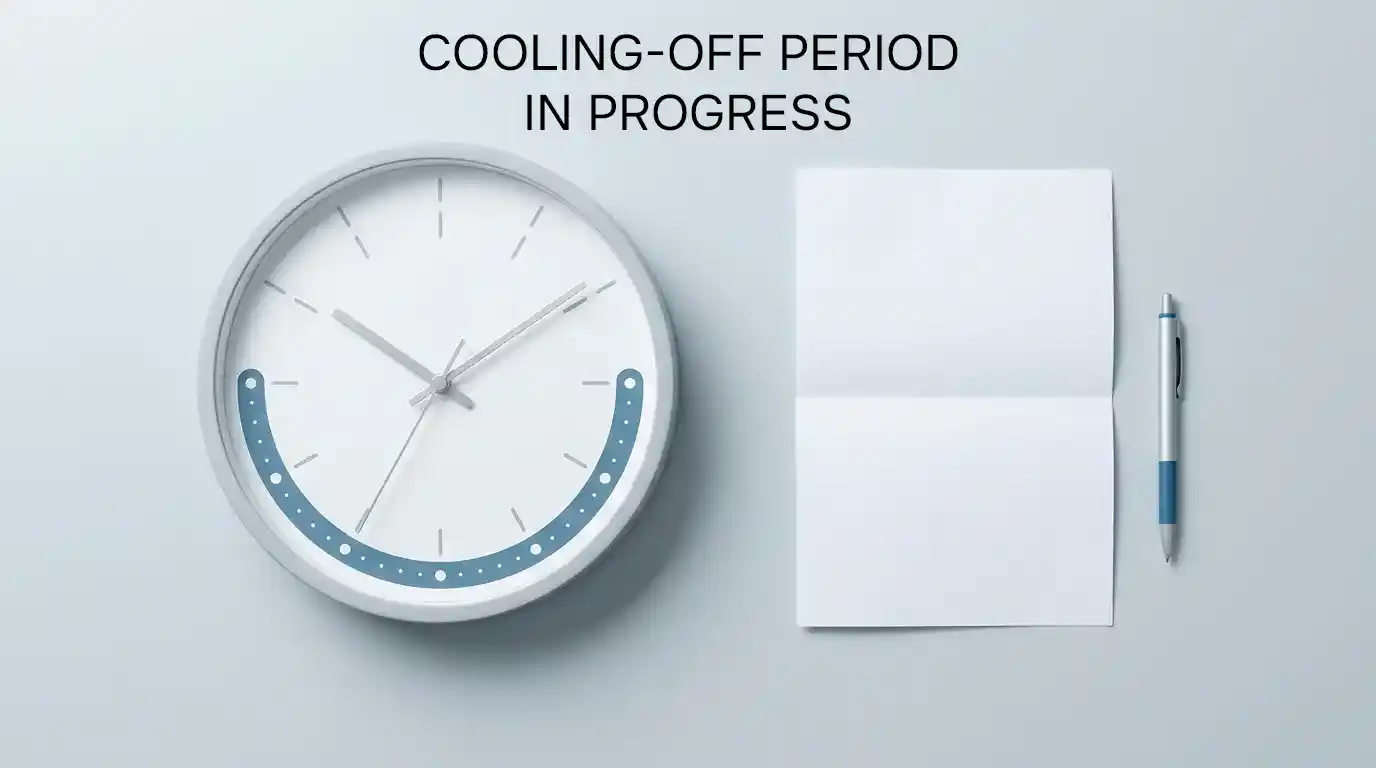
After your request is accepted, a mandatory 24-hour cooling-off period begins, during which the exclusion stays active and you can still change your mind and cancel the request. Only once that cooling-off window passes without cancellation does GamStop update its database and notify operators, after which UK-licensed access is gradually restored. The whole removal, once your period has ended, typically completes within a couple of days. The deliberate friction in this sequence, the verification and the cooling-off, exists for the same protective reason as the no-early-exit rule: to make sure that returning is a decision you have sat with rather than an impulse you acted on. You can confirm the current process directly at GamStop.
Understand the extension that catches people who do nothing
There is a widely cited point that deserves careful, accurate treatment because it is so often half-reported. If you never request removal after your period ends, the exclusion does not simply disappear; it continues to hold for a long further period rather than lapsing. The figure usually quoted is that the registration remains active for a further seven years after expiry unless you contact GamStop to remove it, so a six-month exclusion left untouched can effectively run for years. The official scheme states this on its own help pages, which is the source to trust over any secondary summary, and it is worth confirming the exact current wording there before you rely on a specific number.
The practical takeaway is simple and cuts against panic in both directions. You will not be released early, but you also will not be silently released the moment the calendar ticks over; nothing changes until you actively choose to make it change. That is reassuring if your goal is to stay protected, and it is a reason to plan deliberately if your period has genuinely ended and you have decided, with a clear head, to return. Either way the decision is yours to make actively, which is exactly the point.

Ask whether returning is the right step, not just how
Here is the part that matters most, and the part affiliate “removal guides” skip because it does not lead anywhere profitable. The reason you signed up to GamStop is still valid. Self-exclusion is not something people do casually; it is usually a response to a problem that was real at the time and may still be real now. Before you treat the end of a period as a green light, it is worth honestly asking whether the circumstances that led you to exclude have actually changed, or whether the desire to return is itself a sign that the protection is still doing its job. The most protective answer to “how do I gamble again” is sometimes “consider whether you should”.
This is not a lecture, it is the same advice the support services themselves give. The constructive move is to talk to the National Gambling Helpline before acting, and to strengthen rather than weaken your defences while you decide. That means keeping, not removing, the layered tools described under the National Gambling Helpline and elsewhere, including the free blocking software and bank-level gambling blocks that close the routes GamStop alone leaves open. Reaching for an offshore casino mid-decision is the opposite of strengthening your position, and it carries the documented costs set out on the page about the risks of playing offshore instead. Support information is also available at GamCare.

Keep two very different things apart
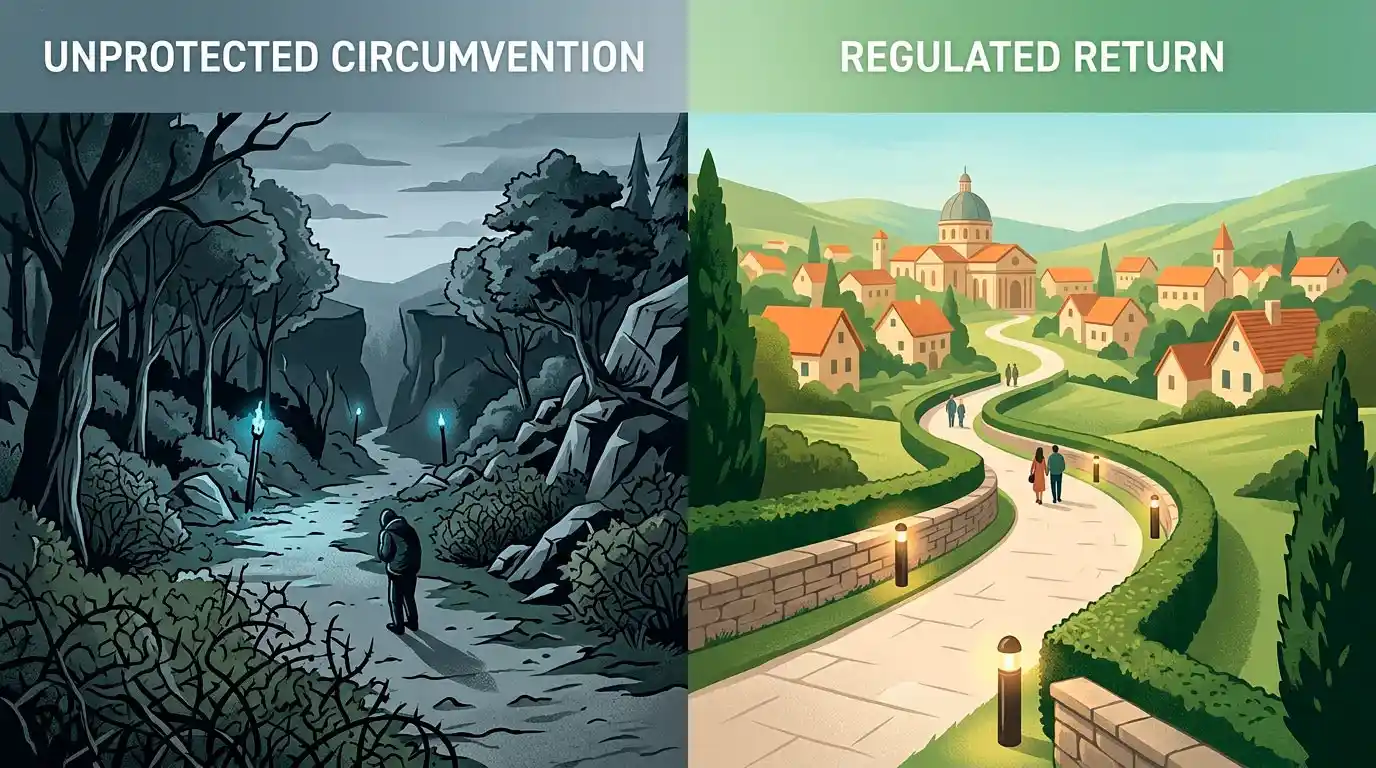
The clearest way to close this is to separate two things that the search results constantly blur. Removing GamStop legitimately means waiting out your chosen period, then actively verifying and requesting removal so that regulated UK access is restored under all the usual protections. Playing offshore while still excluded means deliberately circumventing the safeguard you set, on sites that hold no UK licence, offer no UK recourse and are documented to target self-excluded people. These are not two versions of the same thing. One is the regulated, reversible, protected route; the other is the removal of every protection at the moment you are most likely to need it.
If you take one thing from this page, let it be that distinction. There is a legitimate way back, it is patient by design, and it keeps you inside the protective system rather than outside it. If your period has not ended, the honest answer is to wait and to lean on support in the meantime. If it has ended and you have decided clearly to return, follow the official process above. For the full context of why the offshore alternative is the wrong answer to this question, return to the casino not on GamStop roadmap.
Talk to someone before you decide
If you are looking to end your self-exclusion, please consider talking it through first. The National Gambling Helpline, operated by GamCare, is free and open 24 hours a day, seven days a week on 0808 8020 133 for residents of England, Scotland and Wales, with live chat and WhatsApp through GamCare. The GamStop removal line, for use only once your period has expired, is 0800 138 6518. Free blocking software is available through TalkBanStop, and you can read more at GamStop and GamCare.
About the author
Daniel Ashworth is a gambling-regulation researcher who has spent more than a decade analysing how UK and offshore licensing frameworks shape online casino access. His work focuses on self-exclusion mechanisms, consumer-protection rules and the practical risks players face when they look beyond GamStop-registered operators, and he references primary sources rather than secondary commentary. Read more about Daniel Ashworth.
This page is general information and responsible-gambling guidance, not legal or medical advice. The removal process and the extension period were verified against the official GamStop site in May 2026; always confirm the current process and any specific figure on the official site before acting.
If the urge is the problem: UK gambling support.
Payments & Payouts: UK Casino Deposit Options
Written by the editors at Casinoexitgamstop.com.