
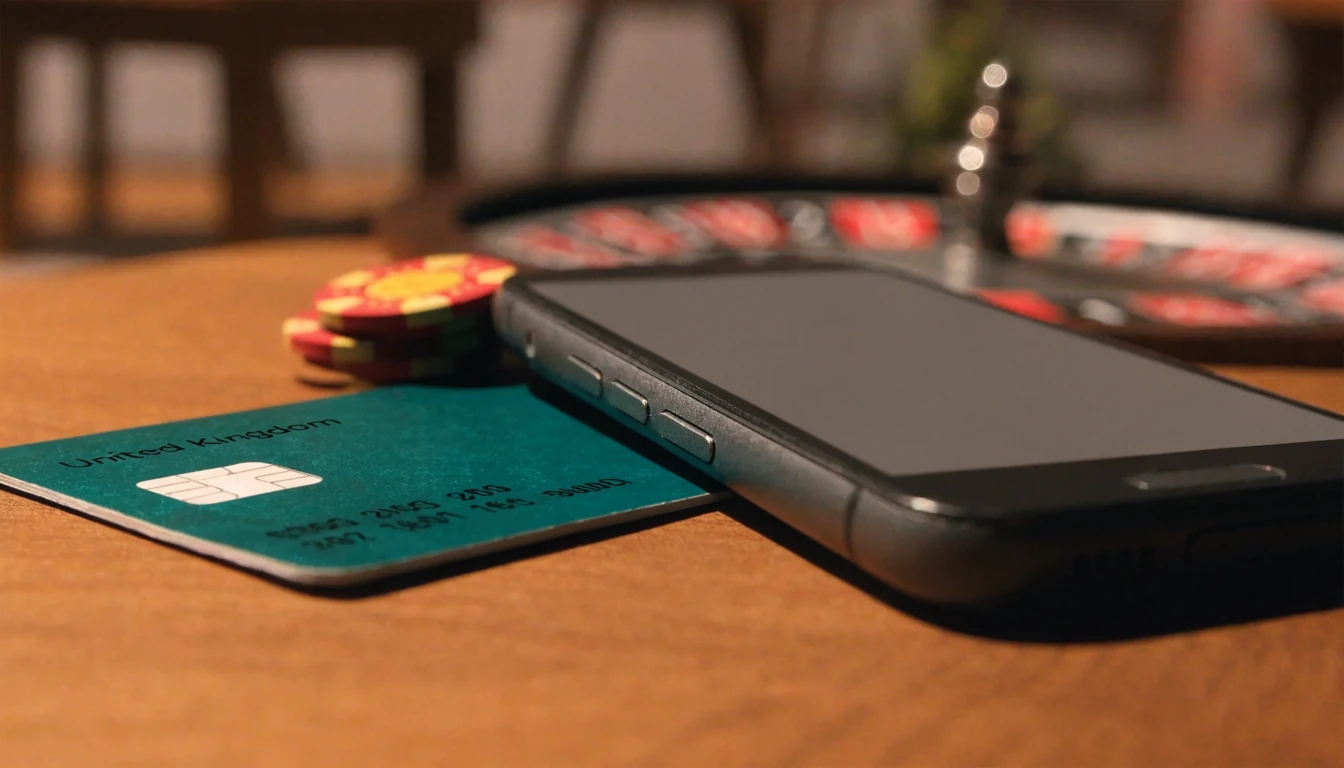
See why operators are reassessing Boku, how deposits work, and what to check about withdrawals, bonuses and licensing.
Why UK Casinos Are Moving Away from Boku
Boku has not disappeared from the British online-casino market, but it is no longer a payment option that can be assumed to appear in every cashier. A small group of UKGC-licensed casinos still takes deposits through Boku, while the overall list has been narrowing since 2023. That makes current availability more important than old payment-method round-ups.
The change is sometimes described as though Boku had been prohibited. That is not what happened. The UK Gambling Commission did not introduce a rule banning Boku by name. Instead, individual operators decided that continuing to support it created too much compliance risk for the value the method brought to their cashier. From inside an operator, that distinction matters: a regulator’s prohibition leaves no choice, whereas a risk decision allows each business to review its own payment arrangements.
Why operators reassessed Boku
A casino payment method has to fit the operator’s controls for customer verification, transaction monitoring, responsible gambling and payment reconciliation. Boku involves the customer’s mobile account rather than a bank card or bank transfer, so the operator must be satisfied that the route remains practical within its wider compliance framework. If the commercial benefit is modest and the internal review becomes more demanding, removing the method can look like the simpler decision.
That helps explain why Boku has been replaced rather than universally blocked. A specialist review of British casino payment options describes operators moving towards Fonix and Siru Mobile after 2023, while others removed Pay by Phone options altogether. This is a market transition, not a single industry-wide switch made on one date.
The wording in a cashier can therefore be misleading. “Pay by Phone” may refer to Boku, Fonix or another service, and a casino that supported Boku in an older review may now display a different provider. The brand name has to be checked at the point of deposit.
 UK Casinos That Accept CashToCode: What to CheckLearn how to check CashToCode availability in a UK casino cashier and compare deposit, withdrawal, bonus and verification rules before choosing.
 Casinos That Accept WebMoney in the UK: How to CheckLearn why mobile payment options such as Pay by Phone, Boku and Fonix do not confirm WebMoney acceptance, and where to verify…
Where direct Boku has been reported
A specialist review of available UK casinos identifies a set of operators associated with direct Boku deposits. It includes BoyleSports, Sun Bingo, William Hill, Sky Vegas, PlayOJO, Genting Casino, Betfred, Lottoland, bwin and 888 Casino. BoyleSports has also been reported as adding Boku as a UK payment option in its cashier.
That list should be treated as a snapshot rather than a permanent directory. Payment menus change, and an operator can remove or suspend a method without changing its casino brand. The relevant question is not whether Boku appeared in a published list, but whether Boku is visible in the current UK cashier after registration and the required account checks.
The remaining direct-Boku market is described as a small, identifiable group, with Jackpot Mobile Casino and Peachy Games included among the names associated with it. That gives some substance to searches for UK casinos still accepting Boku, but it does not turn the market into a stable “all casinos” list. There is no reliable basis for treating every casino carrying a Boku reference as available at the same time.
Direct Boku versus replacement services
The distinction between Boku and its replacements is easy to lose in promotional language. Fonix and Siru Mobile are related Pay by Phone routes, not proof that Boku itself remains available. A specialist payment review associates MrQ and Duelz with Fonix, while Mr Vegas and Videoslots are associated with Siru Mobile. Those examples show how operators have preserved a mobile-payment category while changing the underlying service.
That difference affects more than the logo shown on a payment page. Each provider can have its own eligibility rules, network support and transaction controls. A casino may still advertise mobile payment while no longer accepting Boku. Conversely, a Boku reference may appear in an older article even after the cashier has moved to another provider.
Android does not change that position. An Android phone can be used to access a casino website, but the device itself does not establish that Boku will be offered. Availability depends on the operator’s current cashier and the mobile-payment service connected to it. The same applies to requests for new Boku casinos: a newer casino may offer Fonix or Siru Mobile instead of direct Boku, and the two should not be presented as interchangeable.
What “best” means in this shrinking market
There is no meaningful universal ranking of the best Boku casinos based on the payment label alone. A casino may suit one account holder because it still shows direct Boku, while another may prefer an operator offering a different Pay by Phone service. The payment method is only one part of the decision, and its presence can change after an account is opened.
The safer classification is straightforward:
- Direct Boku: Boku is named in the current cashier.
- Replacement Pay by Phone: the casino supports Fonix, Siru Mobile or another mobile-payment route instead.
- No mobile option: the operator has removed Pay by Phone deposits.
Before any deposit, the operator’s current UKGC licence should be checked on the UK Gambling Commission public register, alongside the payment cashier itself. A familiar casino name or an old Boku listing does not establish present availability. In this part of the market, the cashier is the final word.
How a Boku Deposit Works—and Where the Limits Come From
Boku is a Pay by Phone method rather than a card payment. The casino receives the deposit request, but the charge is passed to the mobile network attached to the phone number. On a monthly contract, the amount appears on the phone bill. On a prepaid plan, it is deducted from the available PAYG balance.
That distinction explains much of the method’s behaviour. The casino cashier controls whether Boku is displayed and whether the account is allowed to use it. The mobile operator controls whether the charge can be authorised, how much remains available, and whether a network-level limit has been reached. Two checks happen in different places.
What happens in the cashier
The process is deliberately short:
- Open the casino’s deposit cashier and select Boku or the available Pay by Phone option.
- Enter the deposit amount and the mobile number.
- Wait for the verification message.
- Enter the SMS code to authorise the charge.
Once the code is accepted, Boku requests payment through the mobile network. The casino then credits the gambling account, with the balance commonly appearing almost instantly. The phone is not merely being used as a login device: it is the billing route for the transaction.
The number entered must therefore be connected to an eligible mobile service. A landline cannot perform the verification, and a number belonging to somebody else creates an obvious mismatch between the account holder, the confirmation message and the bill. From the operator’s side, the payment is tied to that mobile connection.
Boku does not charge the end user a fee for a standard deposit. A mobile operator may nevertheless add a processing charge, so the amount shown in the cashier and the amount ultimately reflected by the network should not be assumed to be identical in every case. The important point is that Boku is not drawing funds from a debit card or bank account.
Monthly billing and PAYG credit
For a monthly mobile contract, the Boku charge is added to the customer’s phone bill. It becomes part of the amount owed to the network operator rather than a separate card transaction at the time of deposit.
PAYG works differently. The deposit is taken from the credit already held on the mobile account. A payment cannot exceed the remaining prepaid balance. If that balance is insufficient, the network declines the transaction before the casino can complete the deposit.
This is why a casino cashier may show an amount that cannot actually be used. The cashier can offer a payment denomination, but it cannot create PAYG credit. A failed authorisation may therefore have nothing to do with the casino account itself. The mobile account may have too little credit, may have reached a network restriction, or may not be eligible for the service.
A specialist review has described the PAYG balance condition in firm terms: the available balance is the practical ceiling for a prepaid Boku payment. That is a description of how the network charge behaves, not a promise that every mobile plan offers the same service.
The denominations shown by Boku
Boku deposits are reported as being available in amounts divisible by ten, such as £10, £20 and £30. This is not the same as a free-form amount field where any figure can be typed. The cashier may present a small set of buttons or restrict the amount entered to the denominations supported by the payment route.
A specialist review has described these divisible-by-ten amounts as a Boku condition, but payment configurations can change with the operator and network. The cashier is the practical test: if a denomination is not displayed or accepted, it cannot be forced through by entering it manually.
 Casinos That Accept POLi in the UK: What to CheckNo current UK casino is confirmed here as accepting POLi. Learn how to check cashier availability and compare supported payment routes, deposits…
 Casinos That Accept Echecks in the UK: What to CheckLearn how to verify echeck availability in a UK casino cashier, and why deposit support does not confirm that the same route…
The transaction ceiling is also described inconsistently. One account of the UK service gives £30 as the standard maximum for a single deposit, while allowing that some casinos or network operators may permit £40 or £50. Another account describes Boku as typically limited to £10 per transaction and £30 per day at network level. A separate version gives the daily limit as £30 without specifying a per-transaction cap. These descriptions disagree, and the disagreement matters because a casino’s advertised cashier limit is not necessarily the same as the mobile operator’s control.
The safest reading is not to turn one version into a permanent Boku rule. A £30 single-transaction figure is reported as standard in one specialist review, with higher figures mentioned for some casino and network arrangements. The £10-per-transaction description comes from another account, alongside the £30 daily network limit. The terms shown at the point of payment and the rules attached to the mobile number determine which limit applies.
Where the daily limit comes from
The daily ceiling is not normally something the casino can override. A specialist review attributes daily Boku limits to the mobile operator rather than the gambling operator. In practical terms, the casino can decide whether to offer Boku and what deposit amounts to display, but the network still has to approve the charge.
That creates two separate layers:
- Casino control: whether Boku appears in the cashier and which denominations the operator makes available.
- Mobile-network control: whether the phone number can authorise another charge under its billing or PAYG conditions.
A deposit can therefore fail after the casino has accepted the requested amount in its interface. The mobile network may have reached its daily allowance, rejected the amount under its own rules, or found insufficient prepaid credit. Repeating the request does not remove a network restriction.
The same principle applies when the casino and the network display different figures. The casino’s cashier may show a transaction amount that is within its own deposit settings, while Boku or the mobile operator applies a lower limit to the account. The network response is decisive for that particular phone number.
Which networks can process Pay by Phone
Pay by Phone and Fonix are supported by EE, O2, Vodafone and Three. Support for a network does not mean that every casino, tariff or customer account will present identical terms. It means the mobile service is among those used for the relevant payment route.
Supported UK Networks
Pay by Phone and Fonix are supported by EE, O2, Vodafone and Three. Support for a network means the mobile service is among those used for the relevant payment route, though individual account eligibility may vary.
The phone number remains central throughout the process. The SMS confirmation goes to that number, and the resulting charge is made against the associated monthly bill or prepaid balance. Changing the casino account does not change the mobile operator’s own eligibility checks.
It is also worth separating network support from casino availability. A customer may use one of the named networks and still find no Boku button in a particular cashier. Conversely, a casino may list Pay by Phone while a specific mobile account cannot authorise the request. Availability is a joint condition, not a guarantee supplied by either side alone.
Why a payment can be declined
A rejected Boku deposit usually falls into one of a few mechanical categories:
- the phone number is not accepted for the payment service;
- the SMS code was entered incorrectly or the confirmation expired;
- a monthly bill or PAYG account cannot take the charge;
- the prepaid balance is below the requested amount;
- the mobile operator’s daily limit has been reached;
- the casino’s own cashier rules do not allow the selected denomination.
The wording on the screen can be unhelpfully broad. “Payment failed” does not identify whether the casino or the network stopped the transaction. The useful distinction is whether the account balance changed. If the charge never reached the mobile account, the casino has not received Boku authorisation. If the phone account was charged but the casino balance did not update, the matter belongs with the casino’s payment support team.
A monthly bill also introduces a delayed cost. The deposit may feel separate from ordinary spending because no card balance changes at the time, but the amount remains a real charge against the mobile account. PAYG makes the deduction immediate and visible; contract billing can make the gambling payment less conspicuous until the bill arrives.
The practical boundary of Boku
Boku’s design is simple: identify the phone number, confirm by SMS, and pass the amount to the mobile operator for billing. The simplicity ends at the limits. The denomination may be constrained to amounts divisible by ten, the reported single-deposit figures differ between descriptions, and the daily ceiling is associated with the network rather than being solely a casino setting.

That is why a Boku deposit should be treated as a mobile-billing transaction with a casino interface, not as a debit-card substitute with identical controls. The cashier starts the request. The SMS confirms it. The phone account decides whether the charge can pass.
Small route, separate controls.
When Boku Is Deposit-Only: Withdrawals and Other Ways to Pay
Boku can put money into a casino account, but it cannot bring winnings back out. That is not a temporary cashier setting or a delay waiting for an account review. Boku is designed as a deposit method only, so the casino cannot send a withdrawal to the mobile number used for the payment.
This creates a practical split between funding and cashing out. A player who deposits through Boku needs another payment route registered for withdrawals, such as a debit card, an e-wallet or a bank transfer. The available choices depend on the casino’s cashier and the account verification checks applied by the operator. Boku may be suitable for the first side of the transaction; it is not a complete payment cycle.
I have seen this distinction cause confusion because a cashier can display a familiar mobile-payment logo beside the withdrawal menu. The logo does not mean that every transaction direction is supported. Deposit and withdrawal permissions are set separately.
Why Boku cannot receive casino winnings
A Boku deposit is linked to the mobile network account that is billed for the transaction. With a monthly contract, the charge appears through the mobile bill; with a PAYG arrangement, the amount is taken from available credit. That structure works for collecting a deposit from the account holder. It does not provide the casino with a mechanism for paying gambling winnings back through the same channel.
The result is straightforward:
- Boku may be available when money is added to the casino balance.
- Boku cannot be selected as the destination for casino funds being withdrawn.
- A separate withdrawal method must be available and accepted by the operator.
- The casino may require identity or payment-method checks before releasing funds.
The word “simple” often appears in payment advertising. In practice, it means fewer details at the deposit stage, not fewer requirements when winnings are requested. The withdrawal route still matters.
Direct Boku remains a specific cashier option
Searches for UK casinos accepting Boku can describe two different things. The first is direct Boku: Boku appears by name in the casino cashier, and the deposit is processed through that service. This is the narrow meaning of a Boku casino.
The second is a broader pay-by-mobile option. A casino may support a service that charges a mobile account but does not use Boku at all. Treating every mobile payment as Boku makes the comparison unreliable. The branding, processing route and availability can differ even when the money ultimately comes from a phone account.
A direct Boku listing therefore needs checking at the point of deposit. The payment page is more useful than an old comparison table because operators can change the methods displayed in their cashier. The presence of a Boku reference on a review page does not itself establish that the option remains active.
Pay by Phone alternatives
Where direct Boku has disappeared, some operators have retained a Pay by Phone route through another provider. Fonix is one such alternative. Specialist casino reviews identify MrQ and Duelz as operators accepting Fonix, while the same type of review identifies Mr Vegas and Videoslots as accepting Siru Mobile. These are substitute mobile-payment arrangements, not evidence that those casinos accept Boku directly.
Fonix
An alternative Pay by Phone route associated with operators like MrQ and Duelz.
Siru Mobile
Another mobile-payment service used by operators such as Mr Vegas and Videoslots.
Neteller
An indirect route where Boku funds a Neteller balance used at supporting casinos.
Pay by Phone and Fonix are associated with the major UK mobile networks EE, O2, Vodafone and Three. That network support can make an alternative viable for someone who wants the charge to remain connected to a mobile account rather than a bank card. It does not remove the deposit-only issue: the substitute service must also be checked for withdrawal support, and a separate cash-out method may still be required.
The distinction is worth keeping visible:
| Payment route | What it may do | What it does not establish |
|---|---|---|
| Direct Boku | Fund a casino account where Boku is listed | That winnings can be paid back to the phone |
| Fonix | Provide a Pay by Phone deposit route at supporting casinos | That the casino accepts Boku |
| Siru Mobile | Provide a separate mobile-payment route at supporting casinos | That every Pay by Phone service is available |
| Neteller | Fund a casino account through a supported e-wallet route | That Boku is accepted directly by that casino |
This is why a list labelled as the “best Boku online casinos” can be misleading when it quietly includes Fonix or Siru Mobile. Those services may be useful alternatives, but they answer a different payment question.
Using Boku through Neteller
There is also an indirect route involving Neteller. A specialist payment review reports that Boku can be used to fund a Neteller balance, after which the Neteller balance can be used at casinos that accept Neteller. That is not the same as depositing Boku directly at the casino.
The route has two separate relationships:
- Boku is used with Neteller as the funding stage.
- Neteller is then selected at a casino that supports that e-wallet.
The casino may therefore see Neteller rather than Boku as the payment method used for the deposit. Availability, account checks and transaction permissions belong to each service separately. A casino accepting Neteller does not automatically accept direct Boku, and a Boku option does not automatically mean that Neteller can be used there.
This route can be useful where the direct Boku logo is absent but Neteller is supported. It also adds another account and another set of conditions. From the operator’s side, the payment trail is no longer a single mobile transaction; it is an e-wallet deposit funded through a mobile-payment service.

More moving parts.
Choosing a withdrawal method before depositing
The sensible compatibility check is not limited to the deposit button. Before a Boku deposit, the casino account should show an accepted withdrawal route and explain any verification requirements attached to it. A debit card, e-wallet or bank transfer may be available, but the exact option is controlled by the operator.
A separate withdrawal method is especially important when the deposit method is phone-based. Without one, the account may accept funds but leave winnings waiting for another method to be added and verified. That is an avoidable operational problem, not a feature of Boku.
The withdrawal method should also be in the player’s own name and consistent with the casino account details. Payment providers and casino operators can apply anti-fraud checks, and a mismatch may delay processing. The point is not that Boku causes a compliance problem; it is that Boku cannot complete the withdrawal side, so the second method must be ready for that role.
What “Boku casino” should mean in practice
A casino that accepts Boku directly is one where Boku is presented as a deposit option in the current cashier. A casino accepting Fonix or Siru Mobile belongs in an alternatives list, not in a direct-Boku list. A casino accepting Neteller may be reachable through the indirect funding route, but that should be described as Neteller payment rather than direct Boku.

That wording matters because the payment method affects more than the button used to add funds. It determines which account receives the charge, which provider appears in the casino’s records and which route remains available when a withdrawal is requested. Mobile payment is not one universal category.
My working rule is plain: identify the exact service named in the cashier, then check the withdrawal menu separately. A direct Boku deposit, a Fonix deposit, a Siru Mobile deposit and a Neteller deposit are different arrangements, even when all of them are presented as convenient alternatives to card payments.
Mobile Slots and Real-Money Play: What Boku Actually Changes
Boku is a funding route, not a category of casino game. A casino may accept a Boku payment for the account balance while offering the same mobile casino catalogue available to customers using another deposit method. The payment option does not create a separate group of “Boku slots”, alter the game software, or determine which titles appear in the lobby.

That distinction matters because phrases such as Boku mobile slots, Boku payment slots, and real-money slots using Boku can suggest that the method somehow changes the playing experience. It does not. Boku moves money into the gambling account; the operator’s games, account rules and mobile platform determine what happens afterwards.
What a Boku-funded casino account provides
Once a deposit has been credited, the balance can be used for the casino games that the operator makes available under its UK service. A slot played on a phone remains an online slot whether the balance was funded through Boku, a debit card, an e-wallet or another permitted method. The screen, game rules and stake controls come from the casino and the game provider rather than from Boku.
This is why a casino described as accepting Boku should not automatically be treated as a specialist “Boku slots” site. The meaningful checks concern the operator’s catalogue and terms. Boku only answers the narrower question of how the deposit reaches the account.
The same applies to mobile access. A casino website or app may support play on a smartphone, but that is a separate feature from accepting Boku. A payment method can work in the cashier while the site’s games are designed for browser play, app play, or both. The two functions should not be conflated.

Real-money play is still gambling
A Boku-funded balance is real money once it has been credited to the casino account. The fact that the payment is charged to a mobile bill or taken from mobile credit does not turn the resulting play into free entertainment. Any winnings remain casino funds, and Boku cannot receive those winnings because it is a deposit-only method.
That creates a practical separation between funding and cashing out. The account may be funded through Boku, but a different withdrawal route is required for any balance the operator approves for payment. Calling a site “pay by Boku” therefore describes the deposit side only, not a complete in-and-out banking solution.
The wording is narrower than the advert suggests.
A free-play mode is different. Games labelled free play or demo play do not use the Boku-funded balance for stakes, and they do not turn Boku into a game feature. Real-money play begins when the casino balance is used under the operator’s gambling terms.
British rules for online slots on mobile
Mobile access does not create a separate set of slot rules. Online slots offered to customers in Britain remain subject to the rules applying to remote gambling. Age verification must take place before an operator permits a gambling deposit, and UK-licensed casinos must provide account tools for financial limits and self-exclusion.
The stake ceiling depends on age. For customers aged twenty-five and over, a single online-slot game cycle cannot exceed five pounds. For those aged eighteen to twenty-four, the ceiling is two pounds per game cycle. The broader five-pound limit for adults took effect on 9 April 2025. These are game-cycle limits, not Boku limits, and changing the payment method does not alter them.
The timing of a spin is regulated as well. Online slot spins in Britain must last at least 2.5 seconds. Autoplay is not permitted for online slots. A mobile screen does not provide an exemption: the same requirements apply when play takes place through a phone browser or a casino application.
This is important when assessing claims about “machines” available through Boku. The payment route cannot lawfully bypass age checks, stake controls or the ban on autoplay. A smaller screen changes the interface, not the regulatory status of the game.

What to check before mobile play
The cashier should show whether Boku is currently available for deposits, but the payment icon alone says little about the actual mobile casino experience. The operator’s licence status, account terms and withdrawal arrangements remain separate matters. A legal online casino serving British customers must hold the relevant UK Gambling Commission operating licence, and the licence number should be checked on the Commission’s public register before money is deposited.
The licence check is not a payment check. Boku can be displayed as an option at a site, yet the operator may still have different rules for mobile access, game availability, verification and withdrawals. Conversely, a casino with a mobile-friendly slot lobby may not offer Boku at all.
The clean way to assess a Boku casino is to separate four questions:
- Is Boku available as a deposit method at the time of registration and deposit?
- Does the casino offer the desired slot games on a phone?
- Are the account and game rules suitable for the intended real-money play?
- Which separate method will handle an approved withdrawal?
That last point is often overlooked because “Boku casino” sounds like a full payment service. It is not. It funds the account only.
Why the game list should not drive the decision
Game availability changes independently of payment support. Operators can add or remove titles, restrict particular games by jurisdiction, or present different lobbies across devices. Boku does not guarantee access to any named slot, a particular game style or a particular return profile.
The useful comparison is therefore not between “Boku slots” and other slots. It is between casino accounts that happen to support Boku and the conditions attached to those accounts. A mobile player needs a compatible device experience, lawful real-money access, clear stake controls and a workable withdrawal method. Boku addresses only the initial funding step.
From the operator side, this separation also explains why payment branding can be prominent while game information remains general. Payment is a cashier function; slot selection is a product and licensing function. Treating them as one feature makes the offer sound more specialised than it is.
Boku changes how the balance is funded. It does not change what a slot is, how long a spin must last, what stake limit applies, or how winnings leave the account.
Do
- Check the UKGC public register for the operator’s licence.
- Read the bonus terms to see if Boku is a qualifying deposit method.
- Ensure a separate withdrawal method is available and in your name.
Don’t
- Assume a Boku reference means all mobile payments are available.
- Treat Boku as a substitute for a debit card for withdrawals.
- Expect Boku to automatically trigger welcome offers without checking terms.
Boku Deposits, Welcome Offers and Bonus Terms
A Boku payment and a welcome offer are separate parts of the casino account. Selecting Boku at the cashier does not, by itself, activate promotional funds. The operator decides which deposit methods qualify, and the relevant condition is normally buried in the bonus terms rather than displayed beside the payment logo.
A specialist review identifies MrQ, Duelz, Mr Vegas and Videoslots as operators where pay-by-phone deposits are accepted for bonus eligibility. That is a limited, operator-specific finding—not a general rule for every casino offering Boku or a related Pay by Phone service. The cashier can accept the payment while the promotion excludes it.
What the offer may require
A representative UK welcome promotion described in a specialist review matches a player’s deposit at 100% to a maximum bonus of £100, with wagering set at 35 times the qualifying amount. Those figures describe one common promotional structure, not an automatic feature of Boku casinos. Other terms can determine whether the deposit counts, which games contribute to wagering, and whether winnings remain restricted until the conditions are met.
Time limits matter as well. In the same type of offer, bonus funds expire after 30 days and bonus spins after 72 hours. Expiry is independent of the payment method: using Boku does not extend the clock, pause it, or convert bonus money into withdrawable cash.
The practical distinction is straightforward:
- Payment method: how the cash deposit reaches the casino.
- Bonus qualification: whether that deposit is accepted for the promotion.
- Wagering condition: the play requirement attached to bonus funds.
- Expiry rule: when unused bonus value or spins disappear.
Short version: accepted payment, rejected bonus.
The same separation applies to promotions described as Boku slots bonuses, no-deposit slot offers or bonus-code campaigns. A code may apply only to new accounts, require a qualifying deposit, or exclude Pay by Phone transactions. A no-deposit offer may not require Boku at all, while a code can be valid only after the account holder completes the operator’s stated eligibility checks.
Before depositing, the bonus page and its payment exclusions should be read together. The decisive wording is often “qualifying deposit” or “selected payment methods”. If Boku is not expressly included, the safest assumption is that the deposit may fund play without triggering the welcome promotion. A separate withdrawal method is still required, because the bonus rules do not change Boku’s deposit-only function.
Boku and GamStop: The Payment Method Does Not Change the Licence
Boku and GamStop belong to different parts of the gambling system. Boku is a payment method. GamStop is a self-exclusion scheme. Finding Boku in a casino cashier does not show whether the operator participates in GamStop, holds a British licence, or is authorised to accept gambling customers in Great Britain.

That distinction matters because labels such as “not on GamStop” are often used broadly. A site outside the scheme may also sit outside the UK regulatory framework. That is not something Boku can confirm or correct. Payment approval only describes how a deposit is routed through the mobile network; it does not validate the casino behind the cashier.
For commercial gambling offered to consumers in Great Britain, the relevant regulator is the UK Gambling Commission. Its remit applies to online casinos and remote gambling even when the operator’s important equipment is located elsewhere. The Commission is the sole regulator for commercial gambling in Great Britain and grants operating licences to gambling businesses. It also issues personal licences to individuals whose roles require them.
In practice, a casino advertising Boku deposits should be checked independently. The important question is not whether the cashier contains Boku, but whether the business has a current UK Gambling Commission operating licence for the service being offered. The licence number should be checked on the Commission’s public register before any deposit is made.
A casino described as “outside GamStop” may therefore mean different things: it may not be part of the self-exclusion scheme, or it may be operating outside the UKGC system altogether. Those are separate issues, and neither is established by the payment option.
I have seen payment branding create false confidence because it looks familiar. That is the wrong checkpoint. Verify the licence first.
What are the deposit limits at pay by mobile casinos?
Boku usually allows deposits of up to £30 per transaction, although some casinos or mobile networks may allow £40 or £50. Network-level limits are typically around £10 per transaction and £30 per day, and PAYG deposits cannot exceed your remaining phone credit.
What is the standard Boku deposit limit in the UK?
The standard limit is £30 per transaction. Some casinos or mobile networks may allow up to £40 or £50, while the network may also apply its own daily limit.
What is the best alternative to Boku for casino deposits?
There is no single best alternative for everyone. Fonix and Siru Mobile are replacement Pay by Phone services; check the casino’s cashier to see which option it currently supports.
Can a casino deny issuing a promotion if I deposit with Boku?
Yes. Bonus eligibility for Pay by Phone deposits varies by casino, so check the promotion’s terms before depositing.
Is Boku safe to use at casinos that still accept it?
Use Boku only at a casino whose UK Gambling Commission licence is current, and confirm that Boku appears in its cashier. Boku deposits are charged to your phone bill or deducted from your PAYG balance, and cannot be used to withdraw funds.
How does Boku work?
Select Boku in the casino cashier, enter the deposit amount and your phone number, then confirm using the SMS verification code. The deposit is charged to your monthly phone bill or deducted from your PAYG credit.
Can I deposit by phone bill without Boku?
Yes. Some casinos use other Pay by Phone services, including Fonix and Siru Mobile; check the cashier to see which service is available.
Payments & Payouts: UK Casino Deposit Options
Created by the "Casinoexitgamstop.com" editorial team.