

See how dealers, betting windows and player choices shape a live blackjack hand, alongside the account checks and table conditions to understand.
How Live Blackjack Works at an Online Table
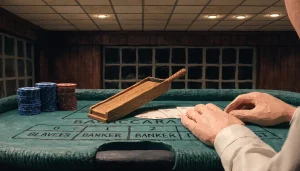
A live-dealer blackjack table combines a real casino table with an online interface. The dealer sits at a physical table, handles the cards on camera and follows the same hand sequence used in a conventional casino. Players join through a website or app, place a wager through the betting panel and watch the action through a streamed video feed.
That makes it different from computer-run blackjack. In a software game, a programme generates the cards and displays the result through graphics or animation. There is no visible dealer handling a physical shoe. In a live table, the cards, dealer and table layout are shown as part of the broadcast, while the online system records each player’s selections and transfers them to the dealer’s interface.
The distinction is practical, not merely visual. A live-dealer table has a defined opening and closing point for each betting round. Bets are accepted during the displayed betting window, then the table moves on when the dealer closes it. The interface shows the available actions and the current state of the hand, but the atmosphere comes from the physical table: cards are dealt on camera, the dealer announces the stages and the result is settled after the hand is completed.
What appears on the screen
A live blackjack lobby normally leads to a table view containing several elements:
- the dealer’s video stream;
- the betting area for the available player positions;
- the cards dealt to the player position and dealer;
- controls for the permitted actions;
- a timer or status indicator showing whether betting is open;
- a chat or message panel, where the table provides one.
The video is central, but it is not the only part of the service. The platform must also connect the wager to the correct table, display the relevant actions and settle the result in the account. If the stream pauses, the table status and account record still matter; a player should not treat a frozen image as proof that the hand has stopped.
A live-dealer table can also accommodate multiple online players at once. They may occupy separate betting positions while watching the same dealer and the same physical hand. The number of visible positions, the table’s rules and the available betting options belong to that particular table rather than to the phrase “live blackjack” as a whole.
The UK example
Grosvenor provides a useful UK reference point for how the format entered the online casino market. The operator first introduced its live casino games in 2013, presenting a range of card and casino games that included Blackjack, Texas Hold’em and Roulette. Blackjack was therefore part of a broader live-casino service, not an isolated computer game presented with a dealer-style background.
That history also explains why the phrase “live dealer” covers more than a video window. It describes a connected service: a physical table, a dealer, a broadcast, an online betting interface and account settlement working together. The dealer supplies the visible table action; the platform supplies access and records the wager.
 Casino Games: Slots, Table Games and Live PlayExplore UK casino game categories, from slots and roulette to live games, bingo and crash games. The page also covers payout and…
 French Roulette Online Casinos in the UKCompare French roulette formats, table limits and bonus wagering conditions. The guide explains La Partage and En Prison on even-money bets when…
The format can feel closer to a casino floor, but it remains remote gambling. The screen does not turn the game into a social event with the same conditions as an in-person table, and a polished broadcast does not by itself establish anything about the operator or the suitability of a particular account. Those are separate checks. For the moment, the important distinction is simple: live blackjack shows a real dealer and physical cards, while computer blackjack leaves the dealing to software.
Blackjack Casinos in the UK: Check the Licence Before Depositing
A blackjack site can look British without being authorised to serve customers in Great Britain. The operator may use pounds, UK spelling, familiar payment branding and a London-themed live table, yet none of those details establishes lawful market access. The decisive check is whether the business holds the appropriate licence from the UK Gambling Commission.
The Commission is the sole regulator for commercial gambling in Great Britain and oversees online casino activity as part of that remit. Its jurisdiction follows the service offered to consumers, not the physical location of the operator’s servers or other technical equipment. A company based overseas therefore still needs the relevant British permission when it offers remote gambling to customers in Great Britain.
That makes the public register more useful than a footer badge or a logo copied onto a landing page.
DO
- Identify the legal business name in the footer or terms
- Search the public register using the legal operator’s name
- Compare the registered domain with the website being used
DON’T
- Rely on a brand name alone for verification
- Trust a “licensed” badge without independent checking
- Accept a licence number at face value without a register search
Start with the legal operator, not the casino brand
The name shown on a blackjack website may be a trading brand rather than the company that holds the operating licence. Before depositing, identify the legal business behind the site. The information is normally found in the website’s footer, terms, privacy notice or licence section. The spelling matters: a parent company, brand name and domain can be different entities.
The register should then be searched using the legal operator’s name. A search for the brand alone can miss the relevant entry; a search for an unrelated company can create false confidence. The domain shown in the register is also worth comparing with the address being used. A licence attached to one website does not automatically authorise every other brand or domain associated with the same corporate group.
This is the first practical distinction I learned to make: a familiar name is not the same thing as a verified operator.
What the register should establish
The register is intended to show whether a business holds an operating licence issued by the Commission. The Commission also grants personal licences to individuals working in roles covered by its licensing system, but a personal licence is not a substitute for the company’s operating authorisation. For an online blackjack account, the relevant question is whether the business providing the remote gambling service is licensed for that activity.
The check should cover three points:
- The legal entity — does the company named on the site appear in the register?
- The activity covered — does its permission extend to remote casino gambling rather than an unrelated form of gambling?
- The website connection — does the registered domain or brand correspond with the service where the account would be opened?
The register is a point-in-time record, so it should be checked close to the intended deposit rather than treated as a permanent certificate. A result found in an old article or cached page is not enough. The relevant entry must be current when the account decision is made.
Treat badges and claims as prompts for verification
A “licensed” badge is a claim made by the website. It can be useful as a starting point, but it is not independent confirmation. The same applies to statements such as “regulated casino”, “UK-facing blackjack” or “approved operator”. Such wording describes what the business wants the account holder to believe; the register shows what can be checked externally.
The licence number, where displayed, should be entered into the Commission’s public register rather than accepted at face value. If the number returns a different business, an expired permission or no matching record, the discrepancy needs resolving before any funds are added. A broken link to the regulator is not proof of wrongdoing by itself, but it is a reason to stop and verify through the regulator’s own site.
There is no advantage in rushing this stage. The licence check is separate from judging the table catalogue, software, banking arrangements or promotional terms. It answers a narrower question: who is legally providing the gambling service to Great Britain customers?
A note on names that do not match
Some sites present a brand prominently while placing the legal operator in small print. Others use a group name in the terms and a separate trading name on the homepage. That is why the search should be repeated with the exact company wording and, where appropriate, the domain.
A specialist review dated 26 September 2026 reported that its check of the Gambling Commission register did not find a LuckyPays entry under the LuckyPays brand or the stated domain, including luckypays.io. That is a report about the result of that dated check, not a timeless description of the register. Anyone considering that service would need to repeat the verification on the Commission’s current register and compare the result with the precise operator and domain presented at account opening.
The useful lesson is broader than one brand: an absent or unclear match should never be converted into an assumption that the site is authorised.
Great Britain is not the whole United Kingdom
The Commission’s remote-gambling remit concerns consumers in Great Britain. The Gambling Act 2005 applies in England, Wales and Scotland, but not Northern Ireland. That distinction matters when a website uses “UK” as a broad marketing label. A page aimed at British customers should still identify the licensing position relevant to the customer’s location and the service being offered.

For blackjack casinos operating online, the practical test remains consistent: identify the provider, locate its current Commission entry, confirm the remote casino permission and match the authorised domain before depositing. A polished table interface comes later. First, the operator must be identifiable and licensed.
What Makes a Blackjack Casino a Better Fit?
Once the operator’s UK licence has been checked, the question changes. It is no longer whether the casino may serve British customers, but whether its live blackjack service suits the way a particular account will be used. That is a less glamorous test than an “best” label, and more useful. I have seen attractive menus hide awkward limits, thin table coverage or complaint routes that were difficult to locate.
Start with the live table itself
A suitable casino should make the live blackjack offer clear before money is added. The useful details include:
- which live blackjack tables are available;
- whether tables run at the times the account holder expects to play;
- whether the game is hosted by a live dealer or presented as a computer-run version;
- what table rules and betting conditions appear before joining;
- whether the interface works properly on the devices commonly used.
The number of tables alone proves little. A large catalogue may still be a poor fit if the preferred game is unavailable, the table is routinely full or the displayed conditions do not match the style of play intended. A smaller selection can be perfectly adequate when the rules, presentation and availability are clear.
This is where “best” often means “most visible”. Promotional pages tend to emphasise brand recognition, streamed studios or a broad game lobby. Those features may matter, but they do not replace checking the actual blackjack table. The practical test is whether the offer can be understood without chasing details through several pages.
Examine account controls before they are needed
Account limits are not merely a responsible-gambling notice placed at the bottom of a page. They affect how an account operates. Remote operators must prompt new customers to set a financial limit before the first deposit and provide accessible controls for changing account-level limits.
- Set a financial limit before the first deposit
- Ensure controls are easy to find in the account area
- Verify the existence of self-exclusion tools
- Check the availability of a dispute resolution service
A casino is a better fit when those controls are easy to find, clearly labelled and available from the account area rather than buried in help pages. The wording also matters. A limit should be understandable as a limit on spending or deposits, not presented in a way that makes it appear to be a playing target.
I regard the limit-setting stage as part of the product, not an interruption to it. If the account makes the safeguard obvious before funds are added, that says more about its practical design than a banner claiming to offer “responsible play”.
The same applies to self-exclusion. UK-licensed casinos must provide responsible-gambling tools, including self-exclusion. The relevant information should explain how the control works, what access it affects and where further support is available. A polished blackjack lobby does not compensate for an account area that makes a restriction difficult to activate.
Check the service around the table
Live play creates operational questions that a game title cannot answer. When a connection fails, a hand is interrupted or a transaction is questioned, the account needs a usable support route. The casino should identify how customer support is reached and what type of issue each channel handles.
 Live Baccarat Online Casino UK: Tables and RulesLearn how live baccarat fits into a UK casino, what to check when comparing operators, and how table rules differ from slot…
 Live Roulette UK with English-Speaking DealersLearn how English-speaking dealers shape live roulette, what to check before depositing, and how rules, bonuses and practice affect play.
The complaints process deserves particular attention. UK Gambling Commission licensees must offer an internal complaints procedure and access to an approved Alternative Dispute Resolution service. That does not mean every complaint will be resolved in the account holder’s preferred way. It does mean the route should be visible, intelligible and connected to the licensed operator rather than left as a vague promise of “help”.
I would check the terms for the operator’s name, the complaints instructions and the ADR information before treating the casino as a serious option. This is not an accusation against a platform that uses formal wording. Formal wording is expected. The problem is wording that leaves the next step unclear.
Compare conditions, not slogans
The strongest comparison is made across the same practical points:
| Area | What to compare |
|---|---|
| Live blackjack | Table availability, dealer format, displayed rules and joining information |
| Account limits | When the financial limit is set and how account controls are accessed |
| Responsible gambling | Self-exclusion and other visible tools |
| Complaints | Internal procedure and access to approved ADR |
| Support | How account, payment and interrupted-session issues are raised |
| Terms | Whether important conditions are easy to locate and understand |
This approach avoids turning a casino review into a popularity contest. It also prevents a common mistake: judging an online blackjack casino only by its welcome screen. A good fit has to remain workable after registration, when limits, support and complaints become more important than presentation.
Payment arrangements belong in the same practical assessment, but not as a reason to relax the legal checks already made. UK-licensed casinos cannot accept credit cards for gambling, and a wallet funded with credit-card money cannot be used for that purpose either. Clear funding information should therefore explain the permitted route rather than imply that every payment method is available.
My own preference is for a casino whose terms can be read without interpretation. If the live table is clear, the account controls are accessible and the complaint route is visible, the service is easier to assess honestly. If those details are obscured by promotional language, the operator may still be licensed, but the fit is harder to establish.
That is the useful distinction. Licence first; suitability second.
Blackjack
A card table featuring a dealer, player positions, and a defined betting window.
Roulette
A product using a wheel and a specific number layout.
Game Shows
Titles such as Crazy Time that may include presenter-led features or bonus rounds.
Live Blackjack, Casino Games and the Tables Around It
A live blackjack lobby is rarely built around blackjack alone. The surrounding catalogue normally contains other streamed table games, each with its own layout, pace and type of interaction. That matters because a casino’s live section is a product range, not a single casino Blackjack game presented in several colours.
Grosvenor’s history provides a clear UK example. When the operator unveiled its live casino offering in 2013, the selection included Blackjack, Texas Hold’em and Roulette. The significance is less about the launch date than the structure: live blackjack appeared alongside other established card and casino games rather than as an isolated product.
Blackjack alongside other live tables
Within a live lobby, blackjack tables may sit beside:
- standard Roulette tables;
- Texas Hold’em tables;
- game-show-style products such as Crazy Time;
- variant roulette products such as Lightning Roulette.
Crazy Time and Lightning Roulette are not blackjack variants. They belong to the wider live-casino catalogue and may be displayed near blackjack because they use streamed presenters, studio presentation or real-time table interaction. Treating every live product as a form of blackjack makes comparison harder. The relevant distinction is the underlying game, not merely the presence of a dealer or host.
A casino Blackjack game generally presents a card table with a dealer, player positions and a defined betting window. A roulette product uses a wheel and number layout. A game-show title may add bonus rounds or presenter-led features. These products can share a lobby while offering entirely different experiences.
What the wider catalogue tells about the live section
The range around blackjack can show how an operator organises its live service. Some tables may be conventional casino formats, while others are designed as more theatrical entertainment. The visual presentation, host style and table naming can therefore differ even when all products are streamed from a studio.
This is also why the phrase “blackjack casino games” can cover more than a list of table names in casual conversation. It may refer to a live section where blackjack is one part of a broader selection, including several tables with different presentation styles. The products should still be assessed separately: a roulette title does not change the conditions or decisions of blackjack, and a game-show title should not be described as a card game simply because it appears beside one.
From an operator’s perspective, the wider catalogue is a way to keep the live area active across different preferences. From the player’s perspective, it is a catalogue to read accurately. Blackjack, Roulette, Texas Hold’em, Crazy Time and Lightning Roulette may share a screen, but they are separate casino products. That distinction keeps the selection clear.
How a Blackjack Hand Plays Out
A casino blackjack hand begins when wagers are placed and the dealer deals two cards to each participating position and two to the dealer. The player’s cards are normally visible; one dealer card is exposed while the other remains concealed until the initial decisions have been made. In a live online game, the same sequence is shown through the video feed, while the interface records each selection.
The object is straightforward: finish closer to 21 than the dealer without going over. Number cards retain their face value, picture cards count as 10, and an ace can count as either 1 or 11, depending on which value keeps the hand workable. A starting ace with a 10-value card is a blackjack, a distinct opening combination rather than merely an ordinary hand totalling 21.
The player’s choices
After the first cards are dealt, the available actions depend on the hand and the table rules. The central choice is whether to:
- Stand, keeping the current cards and ending the player’s turn.
- Hit, requesting another card.
- Double down, increasing the original wager and taking one further card before standing.
- Split, separating a matching pair into two hands, with a separate wager attached to the new hand.
Some tables may offer additional actions, but those four explain the main structure. A hand with a low total may invite another card, while a total that already appears competitive may be left unchanged. That is a decision under uncertainty, not a method for controlling the next card.
When a split occurs, each resulting hand is played separately. The dealer completes one hand at a time according to the table’s procedure, and the outcome of one split hand does not alter the cards already dealt to another. A double-down hand also follows a restricted path: after the extra card arrives, no further hit is taken.
The dealer’s turn
Once every player has stood, doubled, split or gone over, the dealer reveals the concealed card. Any player total above 21 has already lost, regardless of the dealer’s eventual hand. The dealer then draws according to fixed table rules rather than personal judgement. The process continues until the dealer reaches the required stopping point or exceeds 21.
If the dealer busts, standing player hands that have not already gone over win. If the dealer remains in play, totals are compared: the higher total wins, while an equal total is a push and the original wager is returned under the table’s conditions. A blackjack can be treated differently from a regular 21, so its payout and comparison rules need to be read at the table rather than assumed.
 Best Keno Online Casinos UK: Games and TermsLearn how spots, hits and payout tables work, and how to compare keno games, casino terms, bonuses and real-money risks.
 Online Bingo UK: How Rooms, Tickets and Slots WorkLearn how bingo tickets, patterns and prize tiers work, and how bingo rooms differ from slots. In 90-ball bingo, prizes can include…
This explains why searches for how to “win” casino blackjack can be misleading. No choice guarantees a favourable card, and a sound decision can still lose when the next card changes the hand. The sensible boundary is financial, not predictive: only gamble what can be afforded to lose.
A specialist review has stated that Great Britain’s online slot stake limits do not extend to blackjack or roulette. That is a slot-specific point, not a rule that changes how a blackjack hand is dealt or settled.
Playing Live Blackjack: From Account Checks to the Table
Opening a live blackjack lobby is not the same as being ready to play. The account has to pass the operator’s checks first, and those checks happen before money can be deposited. For a UK-facing casino, age verification is required before the account can be funded for gambling. Registration details may therefore be checked before the cashier becomes available.
That order matters. A live table can be visible to an unverified visitor, but visibility is not permission to deposit or wager. In my experience, many complaints described as “payment problems” were really unfinished account checks: a name mismatch, incomplete identity information or a request for supporting documents that had not been answered.
Account Readiness
- 1
First step: Verification
Complete the age verification and identity checks required by the operator.
- 2
Second step: Limits
Set a financial limit for deposits and spending before adding funds.
- 3
Third step: Access
Sign in to the licensed account and navigate to the live casino section to select a table.
Set the account limit first
Remote operators must prompt new customers to set a financial limit before the first deposit. The account should also provide accessible controls for changing or reviewing limits later. This is an account-level safeguard, not a blackjack rule. It applies before the table loads and remains relevant when moving between live casino games.
The limit should reflect money that can genuinely be lost without affecting ordinary commitments. The standing warning is simple: gamble only what can be afforded to lose. A live dealer, a polished interface and quick betting rounds do not change the financial risk.
Once age verification and the financial-limit prompt are complete, the normal access sequence is straightforward:
- Sign in to the licensed casino account.
- Open the live casino section.
- Select the blackjack table rather than a computer-generated version.
- Review the displayed table information, including the available betting options and any stated conditions.
- Join an open seat or place a wager from the betting interface, according to the table’s layout.
- Confirm the stake before the betting window closes.
The precise buttons differ between operators and devices. The underlying separation does not: the account controls access and funding, while the table determines how a hand is conducted.
Free play and real-money access
A “free play” label can mean a demonstration mode rather than a live table with real stakes. It may allow the interface and dealing sequence to be viewed without a deposit, but it does not establish that the same table, limits or conditions will apply when real-money play is enabled. The wording needs checking rather than assumption.
For real-money live blackjack online in the UK, the relevant point is not simply finding a table. The account must complete the operator’s checks, observe the financial-limit prompt and use permitted funding arrangements. After that, the game screen handles the hand itself; age, identity and account-limit controls remain outside the cards.
Blackjack Decisions: Strategy Without Guarantees
A blackjack strategy is a decision framework, not a method for converting an uncertain game into a predictable one. That distinction matters at a live casino table, where the dealer, cards and timing are visible but the outcome of the hand remains outside the player’s control. I have seen “smart play” used as shorthand for confidence. In practice, it means making the same type of decision when the situation is similar, rather than changing direction after every win or loss.
Strategy vs Luck
Strategy is a framework for making mathematically preferable decisions, but it cannot predict the next card or guarantee a profit.
Even a statistically sound decision can lose a hand due to the inherent uncertainty of the game.
What strategy can and cannot do
A sound approach starts with the information available at the table: the player’s hand, the dealer’s visible card and the actions permitted by that table. It then considers whether taking another card, standing, doubling or splitting is mathematically preferable in that situation. The exact recommendation can change with the table rules, so a chart or app prepared for one version of blackjack should not be treated as universal.
Strategy does not predict the next card. It does not remove the house advantage, reverse a losing sequence or make a wager safe. Even a decision that is statistically preferable can lose that hand. The value lies in avoiding avoidable decisions, not in promising a profitable session.
A disciplined way to play
For online casino blackjack, preparation is more useful than improvisation. A player can:
- learn the table’s permitted actions before wagering;
- use a basic-strategy reference that matches the game conditions;
- decide the intended stake and session boundary in advance;
- avoid increasing a wager simply because the previous hand lost;
- stop when concentration has deteriorated.
The last point is routinely underestimated. Live presentation creates momentum: the dealer deals continuously, chat adds atmosphere and a result appears quickly. That pace can encourage decisions made from frustration or excitement rather than from the hand itself. Pausing is a strategic choice, not a failure of nerve.
Card counting is also not a dependable shortcut in a streamed environment. Multiple decks, reshuffling practices and the practical limits of online play make confident claims about easy advantage especially suspect. A strategy guide should therefore be read as a way to reduce poor choices, not as a route to guaranteed returns.
I keep the financial question separate from the tactical one. No blackjack casino strategy changes the need to wager only money that can be afforded to lose. If a planned limit is being ignored, better decisions at the table are no longer the central issue.
Live Blackjack in the UK in 2026: What the Market Facts Actually Show
Live blackjack in the UK sits within a regulated remote-gambling market, but the rules applying to one casino product should not be transferred automatically to another. The clearest example is the distinction between online slots and table games.
A specialist review reports that Great Britain’s online-slot stake controls set a maximum of £5 per game cycle for players aged 25 or over, and £2 for those aged 18 to 24. Those figures describe slots, not live blackjack. The same type of source states that the slot limits do not extend to blackjack or roulette. That is an important boundary: a live blackjack table is not governed by a slot-specific stake rule simply because both products appear in the same online casino.

This does not make live blackjack an unregulated product. Remote operators serving customers in Great Britain require the relevant Gambling Commission licence, and the Commission regulates online gambling offered to those customers regardless of where the operator’s key equipment is located. A licensed UK Blackjack casino therefore operates within the wider account, payment and safer-gambling framework for remote gambling.
The market’s live-blackjack history is also more specific than generic casino advertising suggests. Grosvenor unveiled its live casino games in 2013, with a catalogue that included Blackjack, Texas Hold’em and Roulette. That establishes a dated example of a UK-facing operator offering streamed dealer-led casino games; it does not prove that every current online casino blackjack table has the same rules, limits, software or availability.
That distinction matters when assessing claims about a live blackjack online casino in the UK in 2026. A named launch demonstrates that the format exists in the market. It does not establish a universal table catalogue, a common minimum or maximum wager, or identical conditions across operators. Those details belong to the individual game and account terms.
My working rule is simple: separate the product category from the regulatory category. Blackjack remains a casino table game, while the quoted stake limits belong to online slots. Confusing the two produces tidy-looking advice and the wrong practical conclusion. Only gamble what can be afforded to lose.
Blackjack Bonuses and the Conditions Behind the Offer
A blackjack casino bonus is not a separate source of value; it is an incentive attached to an account and governed by written conditions. The banner may emphasise a welcome reward, a casino bonus offer or a “no deposit” promotion. That label does not explain when the offer becomes available, which games qualify, or how any resulting balance may be used.
The useful reading starts with the eligibility section. It can specify whether the promotion is for new customers, whether identity checks must be completed, and whether a particular payment method is required. A no-deposit blackjack bonus still has conditions: the account may need to be registered and verified, and the bonus may be limited to selected games or a defined period.
The next point is wagering. Terms should state whether wagering applies to the bonus, winnings, or both, and whether blackjack contributes fully, partly or not at all. A promotion displayed beside a blackjack table is not proof that play at that table qualifies. Game restrictions often sit in a separate clause, where they are easy to miss.
Other conditions can control the practical value of an online casino blackjack bonus:
- the minimum qualifying deposit, if one is required;
- the expiry point for claiming or using the incentive;
- maximum conversion or withdrawal rules;
- excluded payment methods and games;
- the treatment of a withdrawal made before the conditions are completed.
Those details matter more than the headline. I have seen “free” used for an offer that still required a qualifying action before anything could be withdrawn. Read the clause, not the badge.
Funding rules are separate from promotional terms. UK-licensed casinos cannot accept credit cards for gambling. The restriction also covers credit-card funding routed through a money service business and wallet payments where the wallet permits credit-card funds to be used for gambling. A payment method appearing in a cashier does not override that requirement.
A bonus should therefore be assessed only after the account’s licensing position, payment route and full promotional terms are clear. Any advertised blackjack casino bonus UK customers see may change or disappear; the binding wording is the operator’s applicable terms at the time of acceptance. Gambling remains discretionary, and only money that can be afforded to lose should be used.
Blackjack Rules: Table Conditions and UK Account Safeguards
Blackjack rules at a casino begin with the table conditions, not with the general idea that the dealer plays against the players. The written rules determine how a hand is settled and which choices are available. Important points include the value assigned to aces and picture cards, when the dealer must draw or stand, whether doubling or splitting is permitted, and how a natural blackjack is treated.
Live tables may also set conditions around side bets, surrender, insurance and the number of hands that can be played. These are not minor wording details. They alter the decisions available during play and can change how a result is calculated. The same basic game can therefore feel materially different from one table to another.
I have always treated the information panel as part of the table, not as decorative text. It should be possible to see the rules before committing funds. If a condition is unclear, the sensible response is to pause rather than infer it from a familiar version of blackjack.
That is the game layer. A separate layer covers the account and the operator.
A UK-facing online casino must hold the relevant Gambling Commission operating licence. The licence is not a table rule and does not determine whether the dealer draws on a particular total. It establishes the regulatory framework around the account. The licence number should be checked on the UK Gambling Commission’s public register before depositing.
UK-licensed casinos must provide responsible-gambling controls, including self-exclusion. Self-exclusion can prevent further gambling through the relevant account arrangements, while broader schemes such as GAMSTOP may also be relevant to eligible online gambling accounts. These protections sit outside the blackjack hand itself.
There is also a formal route for disputes. A licensed operator must provide an internal complaints process and access to an approved Alternative Dispute Resolution service. That does not guarantee a preferred outcome, but it gives a complaint a defined path.
Table rules govern the hand. Account safeguards govern the conditions around participation. Confusing the two is how important protections disappear into small print. Always gamble only what can be afforded to lose.
Are online casino games licensed and regulated?
Yes. The UK Gambling Commission regulates online gambling offered to consumers in Great Britain, and remote operators serving them must hold the relevant licence.
Is LuckyPays licensed by the UK Gambling Commission?
The Commission’s public register dated 26 September 2026 does not list LuckyPays under its brand or stated domain, including luckypays.io.
What are the online slot stake limits in Great Britain?
The limit is £5 per game cycle for adults aged 25 and over, and £2 for adults aged 18 to 24. These limits do not apply to blackjack or roulette.
How do I check if an online casino is licensed in the UK?
Find the legal operator’s name in the site’s footer, terms or privacy notice, then search for that company in the Gambling Commission’s public register. Check that the registered domain matches the site you are using.
What are the UK online casino licensing requirements?
Remote operators serving consumers in Great Britain must hold the relevant Gambling Commission operating licence. The requirement applies regardless of where the operator’s key equipment is located.
Casino Games: Slots, Table Games and Live Play
Created by the "Casinoexitgamstop.com" editorial team.