

Mastercard availability depends on the casino cashier, card issuer and account checks, while UK rules exclude credit cards for gambling deposits.
When a Mastercard Deposit Is—and Is Not—Available
Mastercard remains a familiar deposit label at UK casinos, but the label needs reading carefully. The relevant product is generally a Mastercard debit card, not a credit card. UK remote gambling licensees commonly display Visa and Mastercard among their cashier options, so a debit-card deposit can be available where the operator, the card issuer and the account all permit the transaction.
That is the practical answer behind searches for casinos that accept Mastercard in the UK in 2026: Mastercard itself is not a blanket approval for every card carrying the logo. The cashier decides what can be used on that particular account. A payment page may show Mastercard while declining a specific card product, a particular issuer, or a transaction that does not pass the operator’s checks.
Debit card support is not credit-card permission
The distinction matters because credit-card payments for gambling are prohibited in the UK. The ban took effect on 14 April 2020 and remains in force. UK-licensed casinos therefore cannot accept a credit card as a gambling deposit route, even when the card is issued on the Mastercard network and appears technically capable of making online purchases.

A Mastercard debit card draws on available funds in the linked bank account. A Mastercard credit card uses a credit facility. The network name does not change that difference. A casino cannot treat a credit-funded deposit as acceptable simply because the cashier lists Mastercard, and a customer cannot turn an impermissible credit-card payment into a permitted one by selecting a different casino.
The same boundary applies when credit is routed indirectly. Remote gambling licensees cannot accept credit-card funding for gambling through a money service business, and wallet payments cannot be used where the wallet permits credit-card funds to finance gambling. The question is therefore not only whether a Mastercard number can be entered, but where the money comes from and whether the route is allowed.
In operational terms, the cleanest case is a personal Mastercard debit card attached to the account holder’s own bank account. That does not make approval automatic, but it avoids the obvious classification problem between debit and credit.
 Casinos That Accept MiFinity UK: What to CheckLearn how to confirm MiFinity is available in a UK casino cashier, and how source-of-funds rules, verification, promotions and withdrawal terms affect…
 Casinos That Accept Zimpler in the UK: What to CheckLearn why a Zimpler mention may not confirm current UK availability, and how to check cashier access, withdrawals, payment rules and account…
Why the cashier has the final word
Casino reviews, payment guides and promotional pages often describe Mastercard as supported. A specialist review may list Visa and Mastercard after examining the payment pages of the sites it covers. That kind of overview can indicate that the method exists in the market, but it cannot confirm the live position for every operator, account or UK card product.
The cashier is more specific. It is linked to the selected casino, the account’s country setting and the payment options enabled for that customer. It may show Mastercard only after login, or it may present different choices at the deposit stage from those described on a general payments page. If Mastercard is absent, greyed out or rejected after the card details are entered, the public logo is not enough to override that result.
Card-product eligibility can also differ within the same network. A debit card, a prepaid product, a business card or another specialised issue may be handled differently by the operator or issuer. The available evidence does not turn the Mastercard logo into a universal acceptance rule. It is a network mark, not a promise that every UK-issued product will work.
I have seen payment descriptions become too broad because “Mastercard accepted” is easier to publish than a qualification about account-level availability. That wording is useful as a starting point, not as a transaction decision. The cashier is the live test.
What to check before treating a site as a Mastercard casino
A sensible check is narrow and factual:
- confirm that the casino serves the relevant UK market under its remote gambling licence;
- open the logged-in cashier rather than relying only on a public payment banner;
- identify whether the Mastercard option is presented as a debit-card deposit route;
- check that the card product is eligible and that the transaction is not credit-funded;
- ensure the account and payment details correspond to the same customer.
The last point is not a substitute for the cashier check, but it removes a basic source of avoidable friction. A casino may pause a transaction when the ownership information does not line up, even if the card brand is listed. Using the account holder’s own payment instrument keeps the explanation straightforward.
There is no reliable category called “all Mastercard casinos UK” in which every listed site accepts every Mastercard debit card. Lists can age, operators can alter their cashier configuration, and a method shown on a review page may not be active for every customer. The same caution applies to claims about the “best” Mastercard casino, a new casino accepting Mastercard, or a Mastercard bonus: the payment label alone proves none of those broader claims.
For Android users, the device does not create a separate Mastercard entitlement. A mobile browser or casino application may display the same account cashier, but acceptance still depends on the operator’s enabled payment route and the card’s eligibility. The phone changes the interface, not the underlying debit-versus-credit rule.

So, are Mastercard casinos still available in the UK? Mastercard debit deposits remain a common feature at UK casinos, while credit-card gambling deposits remain unavailable under the standing prohibition. The meaningful check is not the logo on a comparison page. It is the payment method shown inside the casino cashier for the specific account and card. That is where the broad label becomes a real yes—or a clear no.
From Deposit to Withdrawal: Where the Money Goes
A Mastercard deposit and a Mastercard withdrawal are not two halves of one instant transaction. They are separate stages, handled under different controls. The deposit is an authorisation request: the casino checks the card details, the issuer approves or declines the payment, and the balance is credited if the transaction clears. A withdrawal is a payment instruction made by the casino after the account balance, identity and transaction history have been reviewed.

That distinction explains why a card deposit may appear immediately while the corresponding payout takes several business days. A fast deposit does not mean that the casino has already approved a withdrawal route. The cashier may accept the card for funding, but the withdrawal still has to pass the operator’s internal process.
The route taken by a card-funded balance
The money does not simply remain attached to the card as a separate pot. Once a deposit is credited, it becomes part of the account balance and may be used for gambling. When a withdrawal is requested, the operator checks how the balance was funded and which payment routes are available for returning money.
UK anti-money laundering controls generally point the payout back towards the original payment source. This is often called a closed-loop rule: money should travel back through the route used to fund the account, rather than being redirected casually to an unrelated card, wallet or bank account. Returning funds to the original source is also an anti-fraud measure. It helps the operator establish that the deposit and the withdrawal belong to the same customer.
In practical terms, a card deposit can create a withdrawal expectation that is narrower than the general list of payment logos shown on a casino website. A cashier may display several methods, but that does not mean every method can be selected for every account or every transaction. The available route can depend on the original funding method, the account record and the casino’s processing rules.
This is why the cleanest payment trail is normally one named customer account used consistently for funding and payout. It reduces the chance that the operator has to reconcile different names, payment instruments or ownership details. I have seen transactions slow down not because the payment system failed, but because the route made the account history harder to explain.
Less ambiguity.
Why another withdrawal route can trigger checks
A casino may not be able to return the whole amount to a Mastercard. Card networks and operator procedures can impose their own handling rules, so the cashier may offer another route for some or all of the withdrawal. That alternative is not automatically a problem, but it can require extra evidence.
The operator may need to establish that the replacement account belongs to the same customer and that the funds are being sent to an authorised destination. This can mean additional KYC checks, requests for payment-account information or a review of the deposit history. The purpose is not to create a second payment journey for convenience; it is to control fraud and money laundering risk when the original route cannot be used.
A different route should therefore be treated as a change in the verification path, not as a guaranteed shortcut. A bank account or wallet may be visible in the cashier yet remain unavailable until the casino confirms ownership. Where the original Mastercard is still the applicable return route, selecting another method can add work rather than remove it.
The important distinction is between a method being listed and a method being approved for a particular withdrawal. The first is a product feature. The second is an account decision.

What happens after a withdrawal request
The withdrawal request enters the casino’s internal queue. Staff or automated controls may check the account status, recent payment activity and any outstanding identity requirements. The operator then authorises the payout, rejects it with an explanation, or asks for information before processing can continue.
A specialist review source describes first withdrawals as potentially taking longer while verification is completed. That timing should not be confused with the card’s authorisation speed. The card issuer may approve a deposit immediately, while the casino still has to complete its own checks before releasing money.
The final delivery stage is separate again. Once the operator approves the payout, the receiving card or alternative provider must process it. As a result, the total wait can include internal approval followed by the payment provider’s handling time. A casino’s displayed withdrawal estimate may refer to only one of these stages, so the wording in the cashier and terms matters.
For a Mastercard user, the sensible reading of the process is therefore:
- The card deposit is authorised and credited.
- The funds become part of the casino account balance.
- A withdrawal request is matched against the funding history.
- The original source is considered first under closed-loop and anti-money laundering controls.
- Any alternative route may require additional ownership checks.
- The casino completes internal approval before the payout is released.
- The payment provider completes the final transfer.
This sequence is why “instant deposit” and “fast withdrawal” describe different things. One concerns the arrival of funds in the gambling account; the other depends on approval, verification and the route used to send money back. A Mastercard can make the first stage straightforward without making the final stage immediate.
Debit Cards, Minimums and the Cashier’s Fine Print
Mastercard remains a relevant option for UK casino deposits when the card is a debit product accepted by the operator. The important distinction is not the logo alone. A casino may display Mastercard among its payment methods while the live cashier applies narrower rules to the card type, account, or transaction. That is why the payment screen matters more than a general payment badge.
I have seen this create avoidable confusion at the point of deposit. A page can describe Mastercard support in broad terms, yet the cashier may show a different selection for a UK account. The current list of available methods, the currency attached to the account, and the permitted card product are all operational details. They belong to the cashier, not to the promotional wording on a landing page.
Do
- Use a personal Mastercard debit card in your own name
- Check the cashier for specific minimum and maximum limits
- Confirm the currency matches your account
Don’t
- Use a Mastercard credit card for gambling
- Rely on general payment logos instead of the live cashier
- Use a card that belongs to a different person
The minimum is a cashier rule
For card deposits, the minimum commonly begins in the £10–£20 range, although the exact threshold depends on the payment method selected. A Mastercard option may therefore have a different entry point from another method at the same casino. The figure should be treated as a transaction condition, not as a promise that applies across every operator.
This also explains why “no minimum deposit” language needs careful reading. It may describe a bonus or an advertising angle rather than a card transaction with no minimum at all. A real-money Mastercard deposit still has to pass the amount rule shown in the cashier. If the amount entered falls below that rule, the payment will not become valid merely because the casino advertises a no-deposit promotion elsewhere.
The same applies to searches for Mastercard casinos offering free spins, no-wagering bonuses, or no-deposit offers. Those promotional labels do not remove the card’s transaction boundaries, and they do not establish that a particular promotion is available. The card question and the bonus question are separate. A cashier can accept Mastercard while the promotion has its own payment conditions.

Limits are not identical for every account
Maximum deposits may be set per transaction, per day, or per month. The applicable ceiling can change with the payment method and the status of the casino account. A newly opened or partly checked account may therefore show a different boundary from an established account, without Mastercard itself having changed.
That distinction matters when a deposit is declined at an amount that appears reasonable. The cause may be the operator’s account-level control, a card-specific ceiling, or a limit accumulated across earlier transactions. The cashier is the place where the active boundary is presented. General descriptions of “Mastercard accepted” do not disclose those internal limits.
I tend to separate three questions before treating a card as usable:
- Is Mastercard displayed for the UK account in the deposit cashier?
- Does the selected card product meet the operator’s eligibility rules?
- Is the intended amount inside the minimum and maximum shown for that account?
If any answer is unclear, the transaction has not been established as available. That is the difference between a payment method being advertised and a payment method being operational.
What the card label does not settle
Visa and Mastercard are both commonly shown in casino payment menus, but the brand mark does not confirm every underlying card product. Issuing-bank restrictions, product type, and operator controls can affect whether a particular card is accepted. The practical test is the live deposit form: it shows whether the method is enabled and which boundaries apply at that moment.
A specialist review can report that a casino lists Mastercard, but such a description cannot replace the account-specific cashier. Payment arrangements change, and the available method may depend on the jurisdiction, currency, or account state. The useful wording is therefore conditional: Mastercard debit deposits may be available, subject to the cashier’s current rules.
There is also a compliance boundary that cannot be bypassed by choosing a different label. UK-licensed casinos cannot accept credit-card payments for gambling. A Mastercard credit product is not made acceptable by appearing on a general card list, and routing credit-card funds through a payment service does not turn them into an eligible gambling deposit.
The cashier’s fine print is less visible than the Mastercard logo, but it decides the transaction. Brand recognition gets the payment method onto the shortlist; eligibility, minimums and limits determine whether the deposit can actually proceed.
Using Mastercard on Mobile Slots
A Mastercard payment and a mobile slot session are two separate parts of the same account. The card is used at the cashier; the games are delivered through the casino’s mobile website or application. Mastercard does not identify a special class of slots, alter the reels or determine which games are available. It is simply one possible debit-card route for funding an account where the cashier displays it.
That distinction matters because a search for “Mastercard slots” can suggest that the card itself is linked to particular machines. It is not. The relevant checks are whether the remote gambling licensee accepts the card for the account, whether the mobile cashier presents that option, and whether the selected slot is available on the device. A casino may support Mastercard while offering a different game catalogue on mobile, or it may make the same catalogue available through a responsive browser rather than a dedicated app.
I have seen payment language do more work than it should. “Play slots with Mastercard” sounds like a product description, but behind it are two ordinary processes: card handling at the cashier and game access after the balance is credited. The card does not make a free-play title a real-money game, and it does not turn a real-money slot into a free one. The difference is whether the account is playing without a stake or using deposited funds.

What mobile play changes
Mobile access changes the interface, not the basic status of the gambling account. A card can be entered through a phone or tablet if the casino’s payment page supports that device. Once the deposit is reflected in the balance, the available slots depend on the operator, software catalogue and account restrictions, not on the Mastercard brand.
The same account controls apply on a small screen. British remote gambling operators must prompt a new customer to set a financial limit before the first deposit and provide account-level controls for changing limits. These controls should remain accessible from the account area rather than being treated as a desktop-only feature. A mobile layout that hides them behind several menus is a practical warning sign, even when the payment page appears simple.
British slot rules also continue to apply when the game is opened on a phone. Online slot spins must last at least 2.5 seconds, and autoplay is not permitted. A mobile casino therefore cannot lawfully provide a rapid-spin or autoplay setting merely because the game is being viewed on a touchscreen. The device changes the display and controls; it does not remove the operating requirements.
The phrase “real-money slots using Mastercard” therefore describes a payment arrangement, not a separate genre. The sensible sequence is straightforward: confirm that the mobile cashier shows an eligible Mastercard debit option, complete the account’s required checks, set the available financial control, and then open the slot catalogue. The payment method and the game remain distinct.
Keep the labels separate.
Real-Money Slot Play and Payment Security
When Mastercard is used to fund real-money slot play, the payment details should match the gambling-account details. That means the casino account is held in the customer’s own name and the card belongs to that same customer. It is a basic ownership check, but it matters because payment systems and remote gambling licensees must be able to connect the transaction with the person who opened the account.
The point is not that Mastercard changes how a slot works. A card is a funding route, not a game feature. Terms such as “Mastercard slots” or “slots that accept Mastercard” describe the cashier available at a casino site, while the games remain subject to the operator’s normal rules for real-money play.
I have seen avoidable payment friction begin with a simple mismatch: an account registered to one person, a card issued to another, or details entered differently between the casino profile and the payment record. Even where the transaction is genuine, that inconsistency can interrupt the ordinary processing path. The operator may need to establish who owns the account and who controls the funds before allowing the transaction to proceed.
The cleanest arrangement is one named account used consistently for both deposit and withdrawal. It gives the casino a straightforward record: the gambling account, the payment instrument and the customer identity point to the same person. That does not remove every check, but it reduces the chance that basic ownership information becomes the reason for additional correspondence.
What matching details means
The relevant details can include:
- the name on the casino account;
- the name associated with the Mastercard;
- the personal information supplied during registration;
- the payment account used for the transaction.
Minor differences in formatting are not necessarily a problem. A shortened first name, a changed address or an expired card can still prompt questions, however, particularly when the operator’s records cannot readily connect the payment with the account holder. Accuracy at registration is therefore part of payment security, not just administration.
A card should not be borrowed from a partner, friend or relative for slot deposits. The fact that the card works technically does not establish that its use is acceptable under the casino’s terms. Third-party funding can create an ownership dispute even when the account holder has permission to use the card.
This is also why a “real-money Mastercard casino” should be assessed through its account and cashier rules rather than through the payment logo alone. The logo indicates a possible route. It does not confirm that every Mastercard product, every account arrangement or every transaction will pass the operator’s ownership controls.
For the same reason, a deposit route should not be changed casually between sessions. Repeatedly moving funds through differently named accounts makes the payment history harder to interpret. Consistency is less dramatic than promotional language, but it is what keeps the transaction record intelligible.
Clean records matter.
Card Deposits, Payout Speed and Verification
A Mastercard debit deposit and a Mastercard withdrawal move through different stages. The payment can appear in the casino balance immediately, while the payout must wait for the operator to review the request and release it. That difference is easy to miss when a cashier labels the deposit method “instant”.
Withdrawal Process
- 1
Request
The withdrawal request enters the casino’s internal queue for review.
- 2
Verification
Staff or automated systems check account status, identity, and recent activity.
- 3
Authorisation
The operator authorises the payout or requests further information.
- 4
Transfer
The payment provider processes the final transfer to the selected route.
A specialist review describes the practical pattern clearly: card-funded play may be credited at once, but a withdrawal can take several business days. The timing is not determined by the card brand alone. It depends first on the casino’s internal approval process, then on whether the account has completed verification and how the payment is handled after approval.
That is why a casino advertising fast card deposits should not automatically be read as promising fast withdrawals. “Instant” normally describes the point at which the deposit reaches the gaming balance. It does not remove the checks attached to a payout.
Why the first payout can take longer
The first withdrawal often receives closer attention because the casino may still need to complete KYC. That can involve checking identity, confirming account ownership and reviewing the payment details attached to the gambling account. Until those checks are complete, the withdrawal may remain pending even though the card deposit itself was accepted without delay.
A players’ forum can make this look like a contradiction: one account reports an immediate Mastercard deposit, while another describes a delayed first payout. In operational terms, both experiences can be consistent. Depositing tests whether the payment request can be authorised. Withdrawing requires the casino to approve the release of funds and confirm that the account can receive them under its controls.
Later withdrawals may still be subject to approval. A fully verified account removes one possible hold, but it does not turn every request into an automatic transfer. The casino’s review process remains part of the timetable.
Reading a payout estimate properly
The useful distinction is between three points:
- the card deposit being authorised;
- the casino approving the withdrawal;
- the funds reaching the card or associated payment route.
Only the first can be immediate in the ordinary sense described for card deposits. The remaining stages are affected by account status and internal processing. A withdrawal marked as pending has not necessarily been rejected; it may simply be waiting for review or verification.
I have seen payment wording become misleading when “fast withdrawal” is treated as a single promise. The important detail is whether the statement concerns approval, dispatch or receipt. Those are separate events.
For Mastercard-funded slots, realistic planning therefore means allowing for an immediate deposit but a payout that may take several business days. If the account is not fully verified, the first withdrawal can take longer while the casino completes its checks. Fast in, slower out.
Bonuses and the Payment Method That Qualifies
A welcome offer is attached to conditions, not simply to the casino account. The payment route can be one of those conditions. A Mastercard deposit may be accepted for real-money play while qualifying for a promotion, but that outcome depends on the offer’s wording and the cashier rules in force when the deposit is made.
This is where labels such as “Mastercard slots bonus” become misleading. Mastercard identifies the funding method; it does not, by itself, establish that a deposit qualifies for a bonus, a code, or a no-deposit promotion. The promotion may require a particular deposit route, exclude certain payment providers, or impose separate conditions on the first eligible transaction. The word “eligible” does the real work.
PayPal illustrates the point. A specialist review describes it as popular for speed and convenience while noting that it may be excluded from bonus eligibility. That is not a standing rule for every casino or every promotion. It is a warning to check the individual offer rather than assuming that a well-known payment method qualifies automatically.
Does Mastercard mean I can use a credit card?
No. In the UK, credit-card payments for gambling are prohibited. Only Mastercard debit cards are typically permitted.
Why was my withdrawal delayed?
Withdrawals often take longer than deposits because the casino must perform identity checks and verify that the payout route matches your funding history.
Can I use a friend’s Mastercard?
No. For security and anti-money laundering reasons, the payment instrument should belong to the same person who holds the casino account.
The same caution applies to e-wallets. Skrill and Neteller are available at some sites, and a specialist review says they are often excluded from promotions. The wording matters: availability at the cashier and eligibility under bonus terms are separate questions. An e-wallet can be accepted for deposits yet excluded from a welcome offer. Mastercard can face a different condition at the same operator.
A promotion may also distinguish between a deposit that opens an account offer and a deposit that merely funds play. The relevant terms should identify the payment methods that count, any code required, the games covered and the steps needed before the bonus balance can be used or withdrawn. A “no deposit” label does not turn a Mastercard deposit into a qualifying event; it describes a different type of offer and still requires its own terms.
The practical check is straightforward: open the promotion rules, then compare them with the Mastercard option shown in the casino cashier. If the wording is unclear, customer support should confirm the position before the transaction. Promotional banners are designed to attract attention. The terms decide eligibility.
Small Deposits, Currency and Payment Costs
A small Mastercard deposit is not necessarily a £5 transaction. At UK-facing casinos, the stated minimum generally begins in the £10–£20 range, with the exact threshold set by the selected payment method. A cashier may therefore accept Mastercard while rejecting a smaller amount. The card brand answers one question; the transaction boundary answers another.
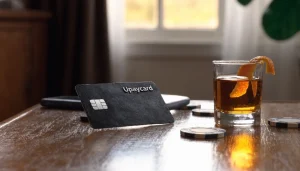
That distinction matters on mobile as well as on a desktop computer. A mobile cashier may display the same Mastercard option, but the minimum, currency and available limits still come from the casino account and payment setup. An instant deposit label describes how quickly the balance is credited after approval; it does not mean that every amount, card product or currency will be accepted.
The visible amount is only part of the cost. Depending on the arrangement, charges can come from the casino, the payment provider, the card issuer or bank, and the card network. Currency conversion can add another layer when the account is not held in pounds sterling. The account currency should be confirmed before the first transaction, even where the payment page presents GBP as supported.
The less obvious charge is the exchange-rate spread. A payment can show no separate fee while applying a rate that is less favourable than the underlying market rate. A specialist payment review identifies this as a cost that can exceed a stated flat charge, particularly when the deposited amount is small. On a modest transaction, a fixed fee and a conversion adjustment affect the balance differently.
My practical check is straightforward: compare the amount entered with the amount that leaves the bank account, then inspect the cashier’s terms and the card issuer’s tariff. A low minimum does not make a route free. Nor does an “instant” deposit label settle the currency question.
For a Mastercard deposit, the sensible order is:
- Confirm that the cashier accepts the particular card and account currency.
- Check the displayed minimum and any transaction limit.
- Look for casino or payment-provider charges.
- Check whether the bank applies an issuer fee or its own exchange rate.
- Compare the final debit with the casino balance credited.
Small amount, real cost.
If Mastercard Is Not the Right Route
Mastercard remains an active payment method in the UK, but it is not the only way to fund a casino account. The suitable alternative depends on whether the priority is a deposit, a withdrawal, account compatibility or transaction cost. There is no reliable “best” option for every casino or every player.
Bank transfers and open banking
Open banking services and bank transfers connect the payment more directly with a bank account. A specialist review describes these routes as capable of providing instant deposits and fast withdrawals at many sites, although that should not be treated as a universal promise. Bank processing, the casino’s cashier and the chosen service still determine what happens.
Open banking can be attractive where both sides of the transaction are supported. A bank transfer may also suit larger account movements, but its delivery can be affected by cut-off times, weekends and currency conversion. The cashier should confirm whether the method supports withdrawals before it is selected.
Bank Transfers
Connects directly to your bank account, potentially offering instant deposits and fast withdrawals via open banking.
E-Wallets
Services like PayPal, Skrill, or Neteller offer alternative routes, though they may have different bonus eligibility rules.
Prepaid Vouchers
Products like Paysafecard are intended for deposits only and do not provide a withdrawal route.
E-wallets
PayPal, Skrill and Neteller are separate from card payments and can be available at some UK-facing casinos. Skrill remains one of the most common deposit methods according to a specialist review, while Jeton is reported by that type of source at a handful of UK online casinos in 2026. Availability is not consistent, and a method shown for deposits may not be enabled for payouts.
PayPal, open banking services and debit cards connected to fast payout systems are described as among the quicker withdrawal routes in a specialist review. That is a comparison point, not a fixed service level. E-wallet fees, account checks and casino approval can change the result.
Prepaid vouchers
Paysafecard is a prepaid voucher intended for deposits only. It therefore does not provide a complete deposit-and-withdrawal route. That distinction matters when comparing Mastercard alternatives: a method can solve the funding step while leaving a separate payout arrangement to be handled.
Apple Pay
Some UKGC-licensed casinos accept Apple Pay for deposits. Its presence depends on the operator, the cashier and the account setup, so it should be treated as an available option where displayed rather than a standard feature across the market. Withdrawal support also needs separate confirmation.
I have found that the cleanest comparison starts with the cashier’s actual deposit and withdrawal icons, followed by the terms for fees and processing. No universal cheapest or fastest route exists. Different mechanics.
Payment Checks at UK-Licensed Casinos
A Mastercard deposit at a UK-licensed casino sits inside a wider control system. The card brand is only one part of the check. Remote gambling licensees must establish that a customer is old enough to gamble before accepting a deposit, so account access and payment access are not treated as separate matters.

The first financial safeguard appears before the first deposit. UKGC rules require the operator to prompt a new customer to set a financial limit and to make account-level limit controls accessible afterwards. That limit may govern deposits or another defined measure of gambling activity, depending on the operator’s design. It is not a decorative setting: the cashier and account controls should reflect it.
I have seen payment friction blamed on the card when the real issue was an account control. A blocked transaction can follow an age check, a limit already reached, a self-exclusion record or another responsible-gambling restriction. Repeated attempts do not remove those controls.
UK-licensed casinos must also provide responsible-gambling tools, including self-exclusion. These safeguards matter when considering searches for casinos outside GamStop that accept Mastercard in Britain. A site presenting itself as an alternative is not automatically operating under the UKGC system. Remote gambling operators selling into Great Britain must hold the relevant Gambling Commission licence, and the licence should be checked on the regulator’s public register before any deposit.
The operating standard extends beyond the payment screen. UKGC licensees must offer an internal complaints process and access to an approved Alternative Dispute Resolution service. The casino’s terms should explain how to raise a complaint, what information is needed and how escalation works if the internal response does not resolve the issue.
That gives the payment a proper context: age verification first, financial controls before funding, responsible-gambling tools during account use, and a defined complaints route afterwards. Mastercard does not bypass any of them.
What is the fastest withdrawal method for UK casinos?
PayPal, open banking and debit cards linked to fast payout systems are generally among the quickest options. The casino’s approval process and whether your account is verified also affect how soon you receive the money.
Do UK casino withdrawals require verification?
Verification may be completed before a withdrawal, and first payouts can take longer while checks are carried out. A fully verified account can help avoid delays.
Is Skrill available?
Yes, Skrill remains a common payment option at UK-friendly casino sites, although availability varies by casino. It may also be excluded from promotions.
Can I deposit in GBP?
Yes, GBP is supported, but check that your account is set to pounds before depositing to avoid currency conversion.
Which method has the lowest fees?
There is no universally cheapest option. Compare the casino’s charges, payment-provider and bank fees, currency conversion spread, and any network costs for your intended transaction.
Are Visa and Mastercard deposits definitely debit cards?
No. Visa and Mastercard logos do not guarantee that every card product is eligible; UK casinos cannot accept credit-card gambling deposits. Check the cashier and use an eligible debit card.
Payments & Payouts: UK Casino Deposit Options
Prepared by the Casinoexitgamstop.com editorial staff.